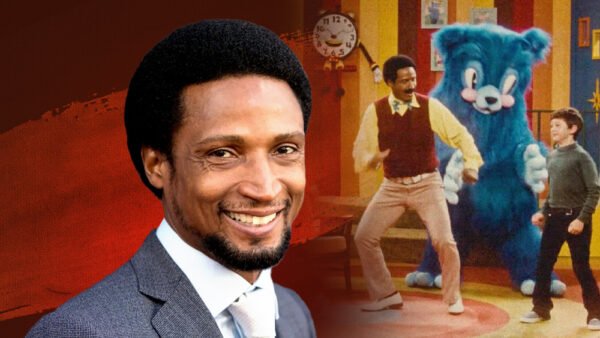
For Elvis Nolasco, the stage wasn't always a soundstage. His first performances happened on the concrete of New York City in the 1980s, where he honed his craft not with monologues, but with breakdancing moves. The Dominican-American artist traces his artistic spark to family gatherings, where the rhythm of music and dance was a shared language of joy. That early passion for movement became an unexpected gateway to his future.
"I didn't know that learning breakdancing would be the first thing I used on stage," Nolasco recalls, reflecting on how those street skills landed him in a production called Bobo's. It was a beginning that felt organic, rooted in the cultural expression of his community, yet it marked the start of a professional journey that would require conviction.
From Family Doubts to Family Pride
Like many artists, Nolasco faced initial skepticism from those closest to him. His mother, envisioning a more traditional career path, would gently urge him to find steady employment. "She would always advise me to get a job," he says, acknowledging her understandable concern. The turning point came in 1994, when he could finally show her the tangible result of his work: a VHS copy of the film I Like It Like That, in which he appeared.
Playing that tape was a moment of profound validation. "She finally understood what I was doing," Nolasco says with a smile. That shift from uncertainty to recognition within his own family underscored a broader theme in his career: the importance of making visible the often-overlooked narratives of Afro-Latinos in the United States.
Today, Nolasco's dedication has built a substantial and respected body of work. He is currently filming the fourth season of the acclaimed MGM+ series Godfather of Harlem, where he shares the screen with Academy Award winner Forest Whitaker. "It's a wonderful feeling to be a part of this," Nolasco notes. "Working with this amazing cast is a blessing as well."
A Moment of Realization with Oscar Winners
The significance of his collaborators is not lost on him. He describes a poignant moment of clarity on set. "It hit me, oh wow, I get to work with two Oscar winners in Forest Whitaker and Whoopi Goldberg," he recalls. "That was emotional." This experience connects to larger conversations about recognition in Hollywood, a topic explored in our coverage of trends like the Oscars 2026 ratings and the personal journeys of stars like Jennifer Lopez on her Oscars absence.
Yet, for Nolasco, pride extends far beyond personal milestones or sharing scenes with legends. He is a committed advocate for systemic change in how Afro-Latinos are represented in media. His advocacy highlights why recognition must be a sustained effort, not confined to a single month, as discussed in Afro-Latino Voices: Why Black History Demands More Than a Month.
"We need to see our stories being told," Nolasco asserts. "We don't see this community on a television or movie basis that focuses on what it means to be that." His statement is a direct call for the industry to move beyond tokenism and explore the rich, specific experiences within the diverse Afro-Latino diaspora.
Nolasco's own story is a testament to this diversity. As a Dominican-American from New York, his cultural identity is distinct from that of a Panamanian or Puerto Rican artist, yet all contribute to the vibrant tapestry of Latino culture. This specificity matters, much like understanding the nuanced origins explored in Reggaeton's Roots: A Shared History Beyond Puerto Rico vs. Panama.
From the breakdancing circles of New York to the sets of major television series, Elvis Nolasco's path illustrates how cultural roots can fuel artistic ambition. His journey is one of perseverance, but more importantly, it's a narrative about claiming space and demanding visibility for a community whose stories are essential to the American cultural landscape. He continues to break barriers, one role at a time, proving that the stage—whether on the street or on screen—remains a powerful platform for change.