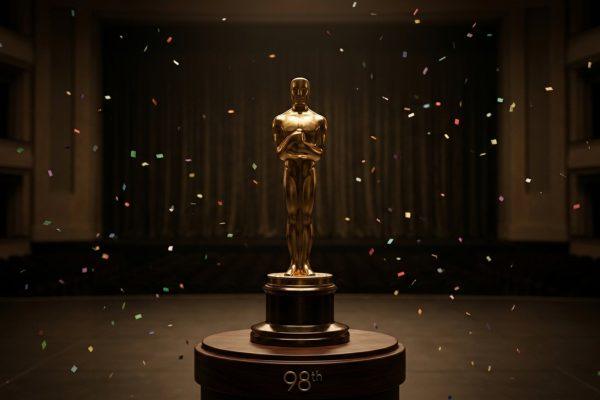
The latest Nielsen data reveals a significant shift in how audiences engage with Hollywood's biggest night. The 98th Academy Awards, broadcast on ABC and Hulu, attracted 17.86 million viewers, marking a 9% decline from the previous year and the ceremony's smallest television audience since 2022. This continues a trend of dwindling live viewership for major awards shows, including the recent Grammys and Golden Globes.
However, the story is more nuanced than a simple decline. While traditional TV ratings faltered, the Oscars' digital footprint exploded. According to analytics from Talkwalker, social media impressions for the event skyrocketed to 181 million, a staggering 42% increase from the prior year. This paradox highlights a critical evolution: the prestige of the Oscars remains, but the public increasingly prefers consuming highlights—like Jessie Buckley's emotional Best Actress win for Hamnet—through clips and discussions online rather than committing to a lengthy linear broadcast.
A Night of Cinematic Triumphs and Technical Troubles
On the cinematic front, the night belonged to Paul Thomas Anderson. His epic One Battle After Another claimed the top prize of Best Picture, along with five other statuettes including Best Director. Michael B. Jordan also secured a major victory, earning Best Actor for his powerful role in Sinners.
Yet, the winners' moments were occasionally overshadowed by a production plagued with issues. Attendees and home viewers noted persistent audio glitches, particularly during musical performances, and awkward pacing that led to the orchestra cutting off several acceptance speeches. These technical missteps, despite the charismatic hosting efforts of Conan O'Brien in his second turn at the helm, contributed to a sense of a disjointed evening. For an industry that prides itself on spectacle, these glitches were a noticeable blemish.
The Demographic Challenge and a Digital Future
The most alarming data point for broadcasters may be the 14% drop in viewership among adults aged 18-49. This key demographic is crucial for advertisers and signals a generational divide in media consumption. Younger audiences are demonstrably migrating toward on-demand content and the immediacy of social platforms, where the Oscars' most viral moments live on.
This creates a complex puzzle for the Academy. How does it honor cinematic tradition and deliver a polished, compelling live television event while acknowledging that its cultural impact is now measured in tweets, TikToks, and Instagram stories as much as in Nielsen ratings? The institution must urgently rethink its format to stay relevant to a global, digitally-native audience.
The ceremony's heightened security measures in Los Angeles, a topic of discussion in the lead-up to the event, ensured a safe night but couldn't prevent the behind-the-scenes production hiccups. The focus now shifts to 2027, where the challenge will be to engineer a gala that feels both timeless and timely, captivating viewers on all screens.
This shift in viewership patterns mirrors trends seen in other entertainment sectors. Just as music fans might watch key moments from award shows online, they also seek intimate access to their favorite artists, much like the behind-the-scenes tour details recently shared by stars such as Karol G. Similarly, the recognition of Latin artists at major events, like Rosalía being named Billboard's Latin Woman of the Year, often generates massive digital engagement that far exceeds the live audience for the ceremonies themselves.
The Oscars are at a crossroads. The decline in TV ratings is a real concern, but the historic surge in digital conversation proves the awards still command attention. The task ahead is to bridge these two worlds, creating an experience that justifies a live audience while feeding the vibrant online discourse that now defines cultural relevance.