There's no single blueprint for remembering someone we love. It might be a song that was always playing in the kitchen, a dish only they could make just right, or a story that surfaces at every family reunion. These small, intimate acts weave a person's presence into the fabric of our daily lives.
During Día de los Muertos, those personal memories expand into something communal. Customs shift from country to country, community to community, and generation to generation, but the core impulse remains the same: to honor those who came before us and ensure their stories endure.
More Than a Visit: The Cemetery as a Place of Reunion
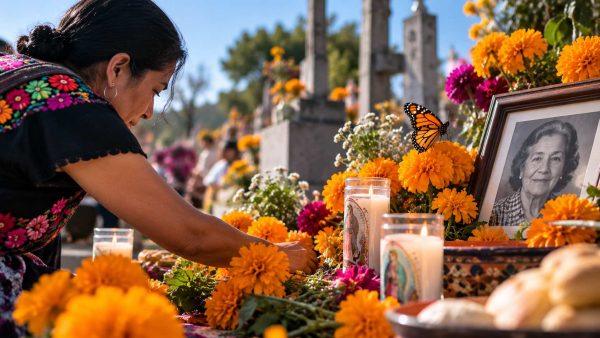
For many families, going to the cemetery on Día de los Muertos is far from a quick stop. Graves are cleaned and adorned with candles, cempasúchil, and offerings, while relatives gather to share food, conversation, prayer, or music. The space transforms from a site of loss into a place of reunion—a living connection to those who have passed.
In places like México, Guatemala, and Ecuador, this practice is deeply rooted. Families often spend hours, sometimes the whole day, at the gravesite, turning it into a picnic of remembrance. The cemetery becomes a stage where love and memory are actively performed, not just felt.
When Memory Has a Taste
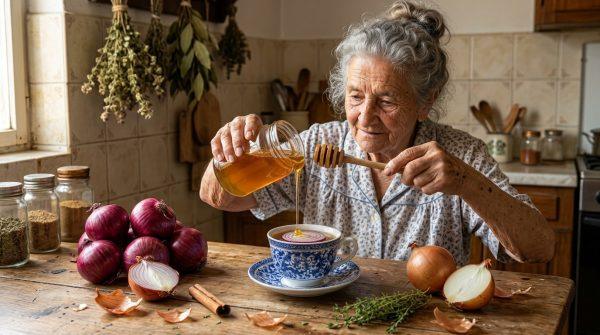
Memory is often tied to flavor. Maybe it's your abuela's mole, a particular tamal from your hometown, or the way your father took his coffee. Preparing these favorite foods and drinks is a longstanding part of Día de los Muertos, whether they're placed on an ofrenda or shared among family.
Recreating a recipe does more than preserve a taste—it keeps alive the person who taught us how to make it. Each stir of the pot, each pinch of spice, is a way of saying, "I remember you." For many, this is the most visceral form of connection, one that bridges generations and geographies.
Music as a Time Machine
Music has a unique power to carry memories across decades. A song associated with a parent, grandparent, or sibling can instantly transport us back to a celebration, a quiet moment, or a voice we thought we'd forgotten. That's why music often becomes part of remembrance—played at gatherings, heard at the cemetery, or simply enjoyed at home.
For younger generations, a song can be a doorway to someone they never met. Hearing the bolero their great-grandmother loved or the cumbia their uncle danced to at every party can make a person feel present, even in their absence.
Signs That Someone Is Near
Not every tradition fits neatly on an altar. Some families find comfort in unexpected signs—a particular bird, a familiar scent, a dream, or a song that appears at just the right moment. In central México, the arrival of monarch butterflies around Día de los Muertos is linked in some Indigenous traditions to the returning souls of ancestors.
These personal signs, whether understood spiritually or simply as powerful memories, become deeply intimate ways of feeling connected. They remind us that remembrance isn't confined to a single day or ritual; it can happen anytime, anywhere.
Stories That Keep Us Alive
Every family has stories everyone knows by heart—the impossible thing abuelo once did, the vacation disaster, the joke that never gets old. During Día de los Muertos, gathering and telling these stories can be as meaningful as any physical offering.
Each retelling gives younger relatives a chance to discover the personalities, struggles, humor, and experiences of people they may barely remember or never met at all. In this way, stories become a living archive, ensuring that no one is truly forgotten.
Día de los Muertos reminds us that remembrance takes many forms. It can happen at a cemetery, around a dinner table, through a song, or in a family story that somehow gets better every time it's told. Traditions may evolve as families move and grow, but the connection behind them remains. Keeping someone's memory alive often begins with something simple: staying connected to the people who remember them with you.
For more on how these traditions are expressed, check out our piece on the details behind ofrendas and how Nike's Kobe 3 Low Protro honors Día de Muertos.