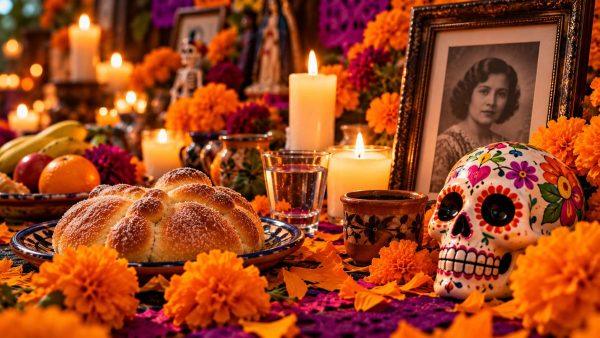
When you walk into a home or community center during Día de los Muertos, the ofrenda often stops you in your tracks. The glow of candles, the burst of orange cempasúchil, the smell of copal incense, and the faces in photographs create a space that feels both sacred and intimate. But every element on that altar carries meaning—layers of Indigenous tradition, colonial influence, and above all, the unique stories of the families who build them.
That’s why no two ofrendas are ever identical. Behind each photo, each glass of water, each carefully prepared dish lies a clue about the person being remembered and the people determined to keep their memory alive. Here are seven things you might not know about these beautiful, deeply personal altars.
1. Marigolds Are More Than a Splash of Color
The brilliant orange cempasúchil, often called the Mexican marigold, has become the visual signature of Día de los Muertos. But its role goes far beyond decoration. In Indigenous Mexican traditions, the flower’s vivid color and strong scent are believed to guide the spirits of the departed back to the world of the living.
Families often place whole flowers on the altar or scatter petals to create a path leading to the ofrenda. The flower becomes a bridge between memory and presence, a way to say, “We’re ready for you.”
2. A Glass of Water Has a Purpose
Amid the elaborate displays and plates of food, a simple glass of water can be easy to overlook. But it’s one of the most essential elements. Traditionally, water is placed on the ofrenda to quench the thirst of the returning spirit after its long journey.
It’s also a reminder that the altar incorporates the basic elements of life—earth, wind, fire, and water—alongside objects of remembrance. Something as ordinary as water becomes an act of hospitality for someone the family still welcomes home.
3. Candles Can Help Show the Way
Candles bring warmth to an ofrenda, but their light also carries symbolic weight. They are traditionally used to illuminate the path for the souls believed to return during Día de los Muertos. Some families light a candle for each person being remembered, while others arrange them according to their own customs.
Like many aspects of the celebration, the exact practice varies from household to household and region to region. In Oaxaca, for example, candles might be placed in a specific pattern, while in México City, they might be clustered around the central photo.
4. The Food Is Often Deeply Personal
Pan de muerto may be the most iconic food of the holiday, but an ofrenda can also look surprisingly like someone’s favorite dinner table. Families often prepare dishes, fruits, sweets, or drinks that the person being honored enjoyed during their lifetime.
That could mean mole made from a family recipe, a favorite candy, a cup of coffee, or even a particular soda or spirit. The point isn’t simply to offer food. It’s to remember a person through the tastes and everyday pleasures that made them who they were. In many homes, the ofrenda becomes a way to share a meal with someone who is no longer physically present.
5. Photographs Aren’t the Only Way to Remember Someone
A portrait often serves as the emotional center of an ofrenda, identifying the loved one being welcomed and remembered. But families frequently go beyond photographs. A musician’s instrument, a grandfather’s hat, a child’s toy, a favorite book, or another personal belonging can become part of the altar.
These objects transform the ofrenda from a collection of traditional symbols into something closer to a family biography told through things. In Los Angeles, where Día de los Muertos has become a vibrant community tradition, altars often include items that reflect the city’s diverse Latino cultures—from a beloved soccer jersey to a well-worn copy of Cien años de soledad.
6. Papel Picado Represents Something You Can’t See
The colorful sheets of intricately cut paper hanging around many Día de los Muertos displays may look purely festive, but they carry another layer of symbolism. Papel picado is commonly associated with air or wind, one of the natural elements represented on traditional altars.
Its delicate movement also creates a striking contrast with heavier objects like food and water. Something fragile and almost weightless becomes part of a celebration centered on the invisible connection between those who are here and those who are remembered. The paper’s fleeting nature reminds us that life itself is fragile.
7. There Is No Single “Correct” Ofrenda
Perhaps the most important thing to understand about the ofrenda is that it isn’t governed by one universal blueprint. Traditions vary across México, between regions and communities, and especially from family to family. Some altars have multiple levels filled with religious and cultural symbolism. Others are small, intimate displays built around a photograph and a handful of meaningful objects.
Families also adapt traditions across generations and borders. In New York City, for example, traditional ofrendas and family celebrations blend Mexican customs with the city’s multicultural energy. In San Antonio, the recent cancellation of a Día de Muertos festival amid ICE fears shows how the holiday is also shaped by contemporary realities. And in Los Angeles, free events across the city invite everyone to participate, whether they’re honoring ancestors or simply learning about the tradition.
Ultimately, that individuality is what makes an ofrenda so powerful. Each candle, photograph, recipe, and personal object can carry a story that one generation passes to the next. Día de los Muertos reminds us that remembering loved ones isn’t only about looking backward; it’s also about keeping their stories alive in the conversations, traditions, and connections families continue to share.