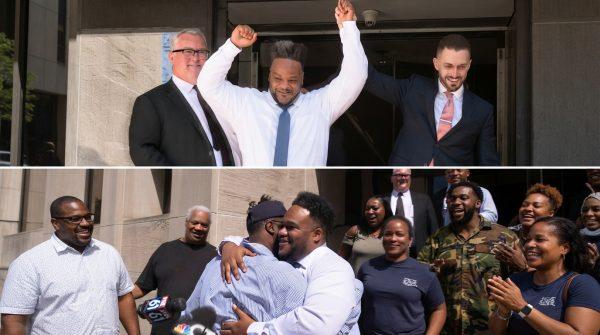
For nearly two decades, Vernon Horn and Marquis Jackson sat in Connecticut prisons for a crime they did not commit. Their nightmare began in 1999, when a robbery at the Dixwell Deli in New Haven turned deadly, claiming the life of 22-year-old Caprice Hardy. Horn and Jackson, then just 19 and 17, were convicted and handed staggering sentences: 70 years for Horn, 45 for Jackson. But as the evidence later showed, the case against them was built on a foundation of misconduct and concealment.
This week, the city of New Haven agreed to pay $25.5 million to settle the federal civil rights lawsuits filed by both men. Mayor Justin Elicker announced that each will receive $12.75 million, with funds coming from insurance policies and municipal bonds. The settlement, first reported by the Hartford Courant, marks a rare moment of accountability for a justice system that failed these two young men so profoundly.
How the truth finally came to light
The investigation into the case revealed a disturbing pattern of behavior by New Haven police detectives. They coerced witnesses and deliberately withheld exculpatory evidence that pointed to another suspect. A stolen cell phone, which prosecutors claimed linked Horn to the crime scene, was actually traced to Bridgeport—miles away. That crucial detail was buried for years.
It wasn't until January 2018 that the Connecticut Federal Public Defender's Office intervened, rescuing 137 pages of documents that had been hidden from the defense. An FBI technical analysis then dismantled the prosecution's entire theory about Horn's phone connection. By April 2018, the State's Attorney's Office moved to dismiss the cases, and a judge ordered the immediate release of both men. Horn had served 17 years; Jackson, 19.
In a statement, Horn captured the pain of those lost years:
“No amount of money can give me back the years they stole from me, but I never stopped fighting to prove my innocence, even when it seemed like nobody wanted to hear the truth.”
Beyond the settlement: a call for reform
The settlement is a financial acknowledgment of a profound injustice, but it also raises urgent questions about how such failures could happen—and how to prevent them from happening again. Mayor Elicker was careful to note that the misconduct occurred under past administrations and that current police personnel maintain high standards of community protection. Still, the case has reignited demands for greater police accountability and transparency.
Legal analysts are now auditing legacy case files to identify other potential wrongful convictions. Human rights advocates are pushing for stronger oversight of evidence handling. And across the tri-state area, the National Registry of Exonerations has become a sobering reminder that Horn and Jackson are not isolated cases.
In New York, similar settlements have set precedents: $80 million was awarded to the heirs of Darryl Boyd, and George Bell received $17.5 million after decades of wrongful imprisonment. Johnny Hincapié, too, was compensated after spending years behind bars for a crime he didn't commit. These cases, while offering some measure of justice, also highlight the systemic flaws that continue to plague the criminal justice system.
For the Latino community, this story resonates deeply. Many of our people have faced similar injustices—wrongful convictions, coerced confessions, and prosecutorial overreach. The fight for fairness is not just a legal battle; it's a cultural one. As we celebrate this small victory for Horn and Jackson, we must also remember that the work is far from over. The $25.5 million settlement is a step, but true justice requires a system that never lets this happen again.
As the city moves forward with the financial execution of the agreement, officials are committed to ensuring transparency. Special bonds will be issued to fund the payments, and legal representatives will finalize the resolution of the lawsuits. But for Horn and Jackson, no amount of money can erase the years lost. Their resilience, however, offers a beacon of hope—and a reminder that the truth, no matter how long it takes, can eventually come to light.
For those following similar cases, Connecticut's recent efforts to support families show that the state is capable of change. And as we reflect on this miscarriage of justice, we must continue to demand accountability, not just in Connecticut, but everywhere.