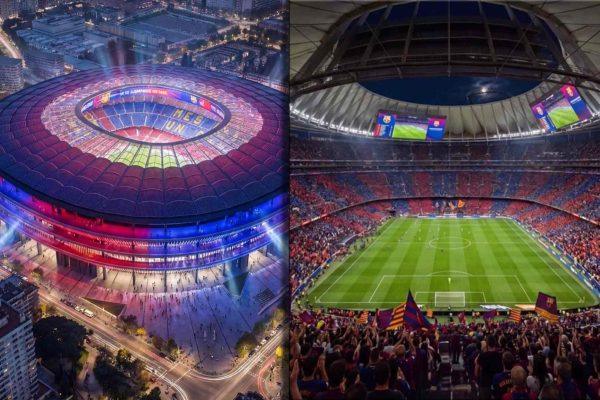
Barcelona is getting ready to welcome the world again. UEFA's Executive Committee, meeting in Thessaloniki, Greece, has officially confirmed that Spotify Camp Nou will host the 2029 UEFA Champions League final on June 2. It's a decision that rewards years of construction, patience, and a bold vision for what a modern stadium can be.
For FC Barcelona, this is more than a scheduling announcement. It's a statement that the club's massive renovation project—one that has transformed the iconic ground into a futuristic arena—has earned the respect of European football's governing body. The new Camp Nou isn't just bigger; it's smarter, with cutting-edge technology, premium hospitality, and a design meant to host the biggest events on the planet.
Thirty years in the making
The last time the Champions League final was played in Barcelona was in 1999, when Manchester United pulled off that unforgettable comeback against Bayern Munich in stoppage time. Before that, in 1989, AC Milan beat Steaua Bucharest at the same venue. Now, three decades later, the Catalan capital will once again be the center of the European football universe.
This announcement also puts Barcelona in an elite group of cities that have hosted the final multiple times. It's a testament to the city's infrastructure, its passion for the game, and its ability to organize massive events. For local fans, it's a chance to see the world's best players on home soil—and to show off the new Camp Nou to millions watching around the globe.
A stadium built for the future
The renovated Camp Nou will hold more than 104,000 spectators, far exceeding UEFA's minimum requirement of 65,000. That sheer capacity makes it one of the largest stadiums in Europe, but the upgrades go beyond numbers. The new design includes improved sightlines, better accessibility, and a digital experience that aims to set a new standard for fan comfort.
According to club officials, the stadium's transformation was a key factor in winning the bid. The project has been years in the making, with construction delays and budget overruns, but the result is a venue that UEFA clearly believes is worthy of its showpiece event. The final will be a test not just for the players, but for the stadium itself.
A team effort behind the bid
Securing the final wasn't just FC Barcelona's doing. The bid was a collaborative effort involving the Barcelona City Council, the Generalitat de Catalunya's Sports Department, and the Royal Spanish Football Federation. The city's hospitality and tourism sectors also played a role, ensuring that the event will have the operational, security, and transportation framework that UEFA demands.
Earlier this year, the city council approved the Host City Agreement, which guaranteed all the necessary logistics. That coordination was crucial, as UEFA's requirements for a final are stringent. From airport capacity to hotel rooms to public transport, everything has to be in place to handle tens of thousands of traveling fans.
Economic and cultural impact
Beyond the football, the 2029 final is expected to bring a significant economic boost to Barcelona. Analysts project millions in revenue from tourism, hospitality, and media exposure. The city will be in the global spotlight for days, with fans from across Europe and beyond descending on Catalonia.
For the Latino community, this is also a moment of pride. Many Latin American players have called Barcelona home over the years, from Ronaldinho to Messi to Neymar. The club's connection to Latin America runs deep, and the final will likely feature stars from the region. As the early predictions for the 2026-27 season suggest, Barça is already being talked about as a contender, and by 2029, the squad could be even stronger.
FC Barcelona president Joan Laporta didn't hide his enthusiasm. "This selection reflects global confidence in our infrastructure vision and structural modernization," he said. "We are ready to host the best teams in the world and to show that Barcelona is a capital of sport."
The 2029 final will also be a chance to see how the new Camp Nou handles the pressure of a Champions League night. With the financial stakes higher than ever, the atmosphere is sure to be electric. And for those who remember the 1999 final, there's a sense of history repeating itself—but with a modern twist.
As the countdown begins, Barcelona is already preparing. The city knows how to throw a party, and this one promises to be unforgettable. For the club, the fans, and the entire Latino football community, June 2, 2029, can't come soon enough.