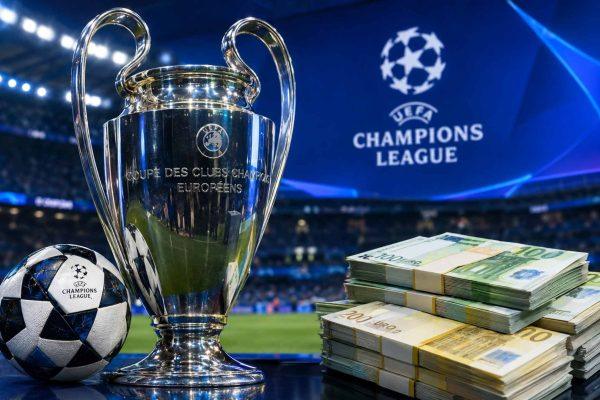
The UEFA Champions League remains the most lucrative annual competition in world sports, and the 2025-26 edition is no exception. UEFA has confirmed a total prize pool of €2.5 billion ($2.9 billion) for the tournament, representing 74.4% of the organization's total club competition distribution. This money is spread across every stage, from the expanded league phase to the final in Budapest.
For clubs across Latin America and the diaspora, the Champions League is more than a European affair. Players from Argentina, Brazil, Uruguay, and beyond regularly feature in the latter stages, and the financial rewards directly influence transfer markets that shape squads from Buenos Aires to Mexico City. Understanding the money behind the tournament helps fans grasp why clubs fight so hard for every point.
Guaranteed participation and performance bonuses
All 36 clubs that qualify for the league phase receive a guaranteed €18.6 million just for showing up. That's the equal share, designed to provide a solid financial base for every participant. But the real earning potential comes from performance on the pitch.
Each win in the league phase is worth €2.1 million, while a draw earns €700,000. With eight matches per club, a perfect record would add €16.8 million in match bonuses alone. Additionally, final standings in the single league table generate scaled payments of €275,000 per rank. The top-ranked team collects €9.9 million, and the top eight finishers also split a €2 million bonus.
These numbers are a lifeline for smaller leagues. For a club like France's Brest or Kazakhstan's Kairat, reaching the league phase can represent up to half of their annual operating budget. That money often goes into stadium upgrades, youth academies, and infrastructure that would otherwise take decades to build.
Knockout stage progression and maximum earnings
Once the knockout rounds begin, the financial stakes rise sharply. Reaching the round of 16 guarantees an additional €11 million. Quarterfinalists pocket €12.5 million, and the four semifinalists each earn €15 million. The final itself is a windfall: the runner-up receives €18.5 million, while the champion takes home €25 million.
If a club wins all eight league phase matches and then lifts the trophy, the maximum sporting earnings reach approximately €110.8 million. That figure excludes the value pillar, which distributes additional money based on broadcasting market size and historical club coefficients. In practice, top clubs like Real Madrid or Manchester City can exceed €130 million in total revenue from a successful campaign.
For context, that's more than the entire annual budget of many Liga MX or Brasileirão clubs. The gap between European giants and Latin American sides is partly a product of these prize structures, which is why continental competitions like the Leagues Cup are trying to close that financial divide.
Transformative impact on clubs and players
The money doesn't just sit in club bank accounts. It fuels transfer spending, wage bills, and scouting networks. For elite European clubs, €100 million-plus campaigns allow them to sign the world's best talent, including many Latin American stars. That's why a breakout performance in the Champions League can catapult a player from a club in São Paulo or Montevideo to a starting role at a European powerhouse.
But the impact is even more profound for surprise qualifiers. Debutants like Brest or Kairat can use their earnings to modernize training facilities and attract better players, creating a virtuous cycle. For fans, this means more competitive matches and more opportunities for underdogs to shine.
The 2025-26 Champions League also arrives amid debates about the sport's global calendar. With the expanded format and increased prize money, UEFA is betting that more games and more money will keep the competition at the center of world football. For Latino fans, the tournament remains a stage where their heroes—whether it's Vinícius Júnior, Julián Álvarez, or Luis Díaz—can make history and enrich their clubs in the process.
As the season unfolds, keep an eye on how these financial incentives shape the action. Every goal, every draw, and every late winner has a direct monetary value, and that's part of what makes the Champions League so compelling. For more on how other competitions are adapting, check out our coverage of the Leagues Cup final and the global obsession with the Ballon d'Or.