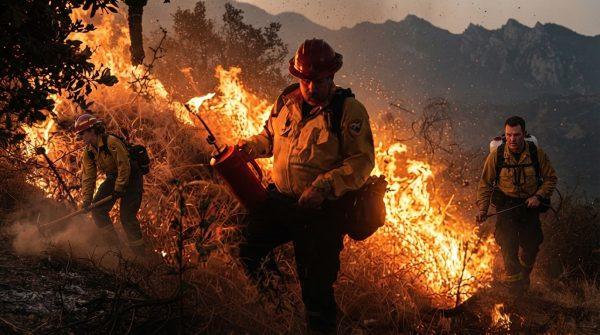
For decades, Californians knew the drill: fires came with late summer and autumn, then the rains returned. That rhythm has broken. Today, flames erupt in every month of the calendar, and the state's mountains and chaparral are never truly safe. The shift is not a fluke—it's the signature of a warming planet.
Climate Central reports that statewide temperatures have risen an average of 1.5°C since the industrial era. That may sound modest, but it translates into drier vegetation, earlier snowmelt, and longer stretches of extreme fire weather. Between 1971 and 1995, California averaged about 361 square kilometers burned per year. Since 1996, that number has jumped to roughly 1,700 square kilometers annually—a fourfold increase. The Union of Concerned Scientists adds that fires between 2000 and 2018 consumed more than double the acreage of the previous 15 years.
Why fires now burn in winter
Cal Fire officials acknowledge that the traditional wildfire season has vanished. Emergencies now unfold across all 12 months. Kaitlyn Trudeau, a senior scientist at Climate Central, told Yale Climate Connections that extremely dry vegetation makes it easier for any spark to explode into a major blaze. Even a discarded cigarette or a downed power line can trigger a disaster when the landscape is primed to burn.
Wind patterns amplify the danger. Santa Ana winds, which typically peak in fall, have been arriving with gusts exceeding 70 mph, and some stations near Mt. Lukens have recorded nearly 100 mph. Those winds carry embers for miles, creating new ignition points faster than crews can respond. Governor Gavin Newsom has declared states of emergency for counties like Calaveras, where the Gann fire forced evacuations and strained local resources.
The political blame game misses the point
In the midst of this crisis, some political figures have tried to shift the conversation. Former President Donald Trump blamed Governor Newsom for restricting water shipments to protect the Delta smelt, a small fish. But Newsom's office has confirmed that no such order exists. Mark Gold, water scarcity director at the Natural Resources Defense Council and a board member of the Metropolitan Water District of Southern California, told CalMatters that tying Delta management to wildfires is simply wrong. The district's reservoirs are at record highs, and Los Angeles still relies heavily on the historic Los Angeles Aqueduct built in 1913.
The real issue, experts insist, is climate change—not water supply. As temperatures climb, snowpack melts earlier, leaving dry brush exposed for more months each year. That's a problem no amount of water diversion can fix.
What can be done?
Mitigation requires a multi-pronged approach. Controlled burns can clear excess vegetation before the worst of the season. Modernizing forest management with scientific data helps predict and prevent catastrophic fires. Communities are strengthening evacuation plans and improving road infrastructure to get people out safely. Urban planning rules are tightening to discourage housing in high-risk zones.
But the ultimate solution is reducing greenhouse gas emissions. As long as global temperatures keep rising, California's fire risk will only grow. The state's Latino communities, many of whom live in fire-prone wildland-urban interfaces, are on the front lines. They face not only the immediate danger but also the long-term economic and health impacts of smoke and displacement.
This is not just a regional emergency. It's a warning to the entire country. As California goes, so may the rest of the West. The time for denial is over; the time for action is now.