For decades, the specter of 'The Big One' has haunted Southern California, a looming disaster that scientists have warned about but could never precisely predict. Now, a new study published in the Journal of Geophysical Research: Solid Earth has sharpened that warning, revealing that the region's major faults have accumulated tectonic strain at levels not seen in a millennium. Led by Dr. Liliane Burkhard of the University of Bern, the research team used advanced modeling to measure crustal deformation, and the numbers are sobering.
The Cajon Pass: A Seismic Gate Under Pressure
The danger isn't just about the San Andreas Fault, which has been locked in silence since the 1850s. The real focus has shifted to the Cajon Pass, a rugged mountain corridor northeast of Los Ángeles where the San Andreas and San Jacinto faults nearly converge. Geologists describe this intersection as a 'seismic gate'—a structural barrier that normally prevents ruptures from spreading. But under the immense strain now recorded, that gate could swing open, allowing both faults to rupture in a single, catastrophic event.
To understand the current risk, the team built a statistical model that traced 1,000 years of tectonic history, using carbon-dated soil, tree rings, and historical records. The results were stark: a major segment of the San Jacinto fault has exceeded all previously recorded strain metrics, while the adjacent San Andreas segment sits just below that threshold. This near-equal pressure gradient makes a simultaneous rupture more likely than ever, a phenomenon last seen in 1812.
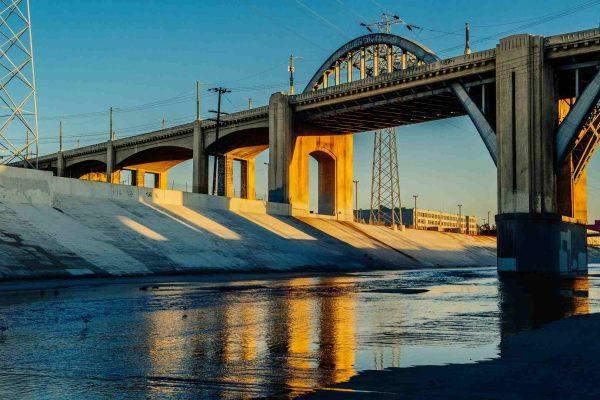
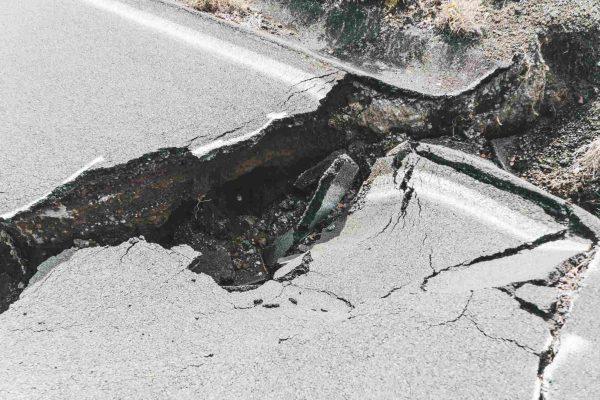
If both faults were to break together through the Cajon Pass, the resulting earthquake would be significantly more powerful than a single-fault event. The seismic waves would slam into densely populated areas like the Los Ángeles basin and the Inland Empire, home to tens of millions of people. But the damage wouldn't stop at shaking. The Cajon Pass is a critical artery for the entire region, carrying major interstates, freight rail lines, and high-voltage power grids. A surface rupture could sever these lifelines, cutting off emergency routes and utility delivery when they're needed most.
Dr. Burkhard emphasized that this research isn't a prediction but a planning tool. 'We're giving engineers and city planners precise scenarios to work with,' she said. The study refines vague disaster assumptions into actionable data, helping California prioritize structural retrofits and preposition emergency supplies. For the state's Latino communities—many of whom live in older, less fortified housing stock—this information is especially vital. The same communities that rallied to aid earthquake victims in Venezuela and Houston now face a heightened risk at home.
The findings also resonate with broader conversations about resilience. As California grapples with housing affordability and infrastructure challenges, the need for seismic preparedness becomes even more urgent. The state's new food label law aims to cut waste, but it's the kind of forward-thinking policy that could be complemented by stronger building codes. Meanwhile, the Bay Area's record home prices push first-time buyers further out, often into areas more vulnerable to seismic activity.
For now, the message from researchers is clear: the strain is real, the risk is elevated, and the time to prepare is now. Whether it's retrofitting a home in East L.A. or updating emergency plans in San Diego, every step counts. As Dr. Burkhard put it, 'We can't stop the earth from moving, but we can make sure we're ready when it does.'