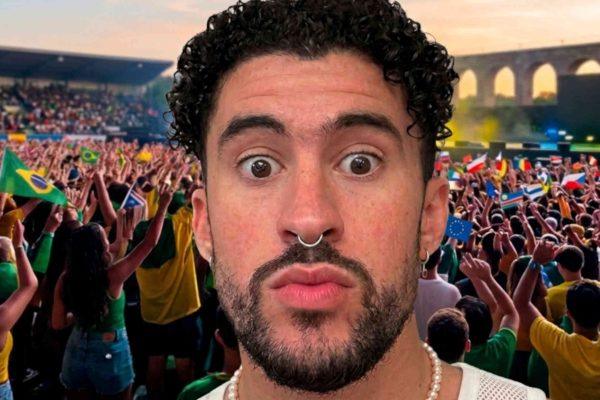
During a recent stop on his Debí Tirar Más Fotos World Tour, Bad Bunny shared a moment that quickly spread across social media. At the Merkur Spiel-Arena in Düsseldorf, Germany, the Puerto Rican artist paused to greet fans near the barricade when he encountered an attendee who had traveled all the way from China just to see him. What made the exchange remarkable was the fan's fluent Spanish—he explained that he had dedicated himself to learning the language solely to follow Bad Bunny's music and career.
This encounter underscores how Latin music, and Spanish in particular, now serves as a bridge between cultures. Bad Bunny has long recognized this phenomenon; during his Super Bowl press conference earlier this year, he proudly noted his massive fanbase in China, proving his influence extends far beyond the traditional Spanish-speaking market. His rhythms and lyrics have broken down linguistic barriers, inspiring fans in Asia to invest time and effort into mastering Spanish to connect more deeply with his work.
Latin Music as a Cultural Bridge
The story of this Chinese fan is not an isolated one. Across Asia, Latin music has seen a surge in popularity, with artists like Bad Bunny, Rosalía, and others gaining substantial followings. This trend reflects a broader shift: Spanish is no longer seen as a niche language but as a global cultural force. For many, learning Spanish becomes a way to access the rich world of Latin music, from reggaetón to bachata to indie rock. The fan's journey from China to Germany is a testament to how music can inspire personal transformation and cross-cultural connection.
Bad Bunny's European tour has been a historic success, with sold-out shows in cities like London, Paris, Stockholm, and Milan. This comes on the heels of his milestone as the first Latin artist to gross over $1 billion on tour, a feat achieved while singing exclusively in Spanish. His ability to fill stadiums worldwide, from Asia to Europe to the Americas, demonstrates that language is no longer a barrier to global stardom.
A Legacy That Keeps Making History
Beyond the viral moment with his Chinese fan, Bad Bunny continues to cement his legacy. He is set to appear as a toy in Pixar's Toy Story 5, further expanding his reach into mainstream pop culture. His influence also extends to fashion, sports, and social commentary, making him a generational icon who transcends music. As he tours the world, he consistently proves that Latin music and the Spanish language deserve to be heard everywhere.
For fans who missed his live shows, the upcoming film appearance offers another way to engage with his persona. Meanwhile, his tour continues to break records, with each concert reinforcing his status as a global ambassador for Latin culture. The encounter in Düsseldorf is just one example of how his music unites people from vastly different backgrounds, creating shared experiences that transcend borders.
This story also highlights the growing interest in Spanish language learning among non-native speakers. Resources like guides to regional Spanish variations are becoming increasingly popular as more people seek to understand the nuances of Latin American Spanish. Bad Bunny's music, with its mix of Puerto Rican slang and universal themes, serves as both an entry point and a motivation for learners worldwide.
As the tour moves forward, it's clear that Bad Bunny's impact goes beyond entertainment. He is a cultural force who has made Latin music a global language, one that fans from China to Germany are eager to learn and embrace. The moment in Düsseldorf is a small but powerful reminder of music's ability to inspire, connect, and transform.