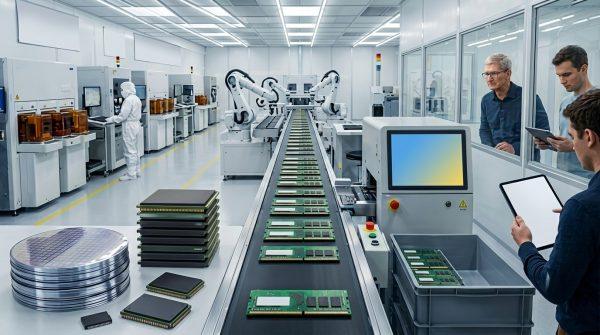
Apple has confirmed that upcoming iPhone models will likely carry higher price tags, as a global shortage of memory chips—fueled by the insatiable demand for artificial intelligence—forces the company to pass costs onto consumers. The news, first reported by outlets like Fox Business and The Wall Street Journal, signals a shift that will be felt from México to Miami, where many Latino families rely on Apple’s ecosystem for work, school, and entertainment.
According to research firm TechInsights, the next-generation iPhone 18 lineup—expected to launch this September in the United States—could see a surcharge of nearly $270. The increase stems from a component crisis that has upended the global electronics supply chain. Tim Cook, Apple’s CEO, described the current demand for DRAM chips as a “once every hundred years” phenomenon, adding that he has not witnessed anything like it in his four decades in the industry.
Why AI Is Driving Up iPhone Costs
The root cause is a massive shift in semiconductor production. Manufacturers are prioritizing specialized servers for artificial intelligence, leaving fewer memory chips available for consumer devices like smartphones and laptops. Cook directly pointed to DRAM chips as the main concern, noting that a majority of production is now allocated to data centers. This imbalance has created a bottleneck that Apple can no longer absorb.
“We’ve tried to cushion the financial impact for our users,” Cook said in a recent earnings call, “but the current situation has become completely unsustainable for the global supply chain.” The company plans to use its cash reserves to expand capacity in the sector, though it has ruled out building its own memory plants. This leaves price adjustments as the only viable short-term solution.
For Latino consumers, who often stretch budgets to afford Apple’s premium devices, the timing is particularly tough. In cities like Houston, where police recently cracked down on a teen takeover at Discovery Green, and across the border in México, iPhones are status symbols and essential tools. A $270 hike could push the base model of the iPhone 18 well above $1,000, making it harder for families to upgrade.
Market Impact and Leadership Transition
The price hikes come at a pivotal moment for Apple. John Ternus, the company’s hardware engineering chief, is set to take over operational reins on the first day of the month, succeeding Cook in a carefully planned leadership transition. Ternus will inherit a challenging landscape where memory supply and pricing must return to reasonable levels. The success of this stabilization will depend on the recovery of the electronic market, setting a historic precedent for the industry.
Meanwhile, the broader tech world is watching closely. The AI boom has reshaped priorities across the sector, with companies like Nvidia and AMD racing to build more powerful chips. This has created a ripple effect that touches everything from Texas AI adoption reshaping jobs to the cost of everyday electronics. For Apple, the challenge is to maintain its profit margins without alienating its customer base.
Cook did not specify the exact date of the adjustments or which products will be affected beyond the iPhone. However, analysts expect the price hikes to extend to iPads and MacBooks as well, as the shortage of DRAM chips shows no signs of easing. The company’s next earnings report, due in late July, will likely provide more clarity.
For now, Latino consumers across the Americas—from Bogotá to Los Ángeles—should prepare for a more expensive Apple ecosystem. As the company navigates this once-in-a-century supply chain crisis, the question remains: how much will loyalty cost?