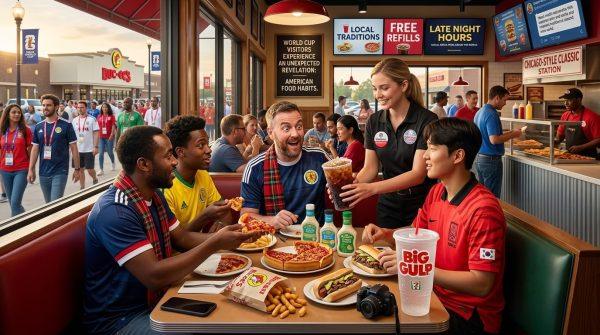
As the 2026 FIFA World Cup draws fans from across the Americas and the world, a different kind of competition is unfolding—not on the pitch, but in the aisles of gas stations, fast-food chains, and diners across the United States. International visitors, including many from Latin America, are documenting their astonishment at everyday American food habits that locals barely think twice about.
Free refills and ranch dressing: small luxuries, big reactions
One of the most talked-about discoveries is the free refill policy at American restaurants. For fans from countries where soda comes in single servings, the ability to top off a cup indefinitely feels almost decadent. Social media is full of videos from Mexican, Colombian, and Argentine fans marveling at the generosity of U.S. chains. "It's like they want you to stay forever," one visitor from Buenos Aires posted, capturing the sentiment.
Ranch dressing has also become an unexpected star. Fans from Chile, Peru, and Brazil are documenting their first encounters with the creamy, tangy condiment, often describing it as addictive. Some have even joked about smuggling bottles back home. This fascination highlights how something as simple as a salad dressing can become a cultural bridge—or a source of friendly confusion.
Buc-ee's, Waffle House, and the cult of the roadside stop
For many visitors, the sheer scale of American roadside culture is a revelation. Buc-ee's, the Texas-based travel center chain, has become a pilgrimage site for fans from Scotland to Korea. Its massive size, clean restrooms, and bewildering array of snacks—including the famous Beaver Nuggets—have turned a gas station into a tourist attraction. "I've never seen anything like this," a fan from São Paulo told reporters, standing in front of a wall of beef jerky.
Late-night institutions like Waffle House are also earning rave reviews. Visitors praise the friendly staff, the affordable menu, and the 24-hour availability. For fans arriving from countries where late-night dining options are limited, the Waffle House experience feels both exotic and welcoming. "It's not just food, it's a show," said a group of fans from Medellín, Colombia, after a post-match meal.
Fast food as cultural ambassador
Taco Bell, often a punchline in the U.S., has become a must-visit destination for international fans. Visitors from Mexico, where the chain doesn't exist, are particularly curious. "I had to try it," said a fan from Mexico City. "It's not like real Mexican food, but it's its own thing." The Crunchwrap Supreme has become a viral icon, with fans documenting their first bites for thousands of followers back home.
Chicago-style deep-dish pizza and Italian beef sandwiches from Portillo's are also winning over European and Latin American palates. Fans from Argentina, a country famous for its pizza, have been spotted waiting in long lines for a slice of the city's signature pie. "It's a different beast," one porteño admitted. "But I respect it."
Portion sizes and the 7-Eleven Big Gulp
The American obsession with large portions is another recurring theme. The 7-Eleven Big Gulp, a 32-ounce fountain drink, has become an ironic symbol of U.S. excess. Visitors from countries where soft drinks are sold in 12-ounce cans watch in disbelief as locals casually sip from cups the size of small vases. "It's like a fishbowl," a fan from Lima, Peru, posted alongside a photo of her drink.
This fascination with scale extends to barbecue. Carolina-style ribs, slathered in vinegar-based sauce, have led many visitors to declare their previous meat experiences "ruined." Fans from Uruguay and Argentina, both countries with strong barbecue traditions, have been particularly vocal. "This is a different league," said a group from Montevideo, wiping sauce from their chins.
More than just food: a cultural exchange
These culinary discoveries are more than just viral content—they represent a genuine cultural exchange. For many visitors, the 2026 World Cup is their first extended stay in the United States, and the everyday habits of Americans offer a window into the country's values: convenience, abundance, and hospitality. As one fan from Bogotá put it, "You learn a lot about a place by how they eat."
For U.S. Latinos, these stories may feel familiar. Many of us have navigated the gap between our parents' cooking and the fast-food culture of our peers. The World Cup is reminding us that what we take for granted—free refills, ranch dressing, a 24-hour diner—can be a revelation to others. It's a chance to see our own culture through fresh eyes.
As the tournament continues, these food stories will likely keep spreading. Whether it's a photo of a Buc-ee's beaver mascot or a video of a first bite of a Crunchwrap Supreme, the legacy of the 2026 World Cup may be measured not just in goals, but in the lasting impressions left by the simple act of eating. For more on how language and culture intersect, check out our guide on Navigating Latin American Spanish: Regional Words That Prevent Misunderstandings. And for a deeper look at how Latinos are shaping the American dream, read Where Latino Salaries Surpass the National Average: The American Dream's Best Bets.