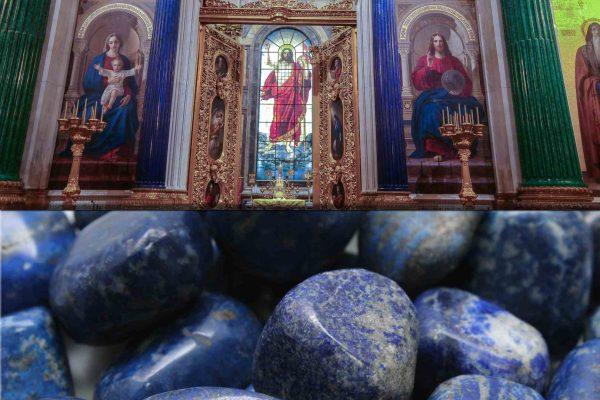
In the world of art, gold has always been a symbol of wealth and prestige. But there was a time when a certain shade of blue—ultramarine—was even more coveted and costly than the precious metal. Derived from the semi-precious stone lapis lazuli, mined exclusively in the remote Badakhshan mountains of modern-day Afghanistan, ultramarine blue was the ultimate status symbol for Renaissance painters and patrons alike.
The name itself tells a story: ultramarinus, Latin for “beyond the sea.” This pigment traveled a treacherous route along the Silk Road to reach the ports of Venice, where its price skyrocketed long before it was ever ground into paint. For artists in Florence, Rome, or Amsterdam, obtaining genuine ultramarine was a logistical and financial feat.
The Alchemy of Extraction
Turning lapis lazuli into paint was no simple task. The stone contains impurities like calcite and pyrite, which, if not removed, produce a dull, grayish blue. Artisans had to grind the stone, mix it with waxes and resins, and knead the paste under water for hours. Only the purest blue particles would settle, yielding a pigment so concentrated that a small amount cost more than its weight in gold.
This labor-intensive process meant that ultramarine was often a separate line item in artists’ contracts. Clients paid for the pigment directly, and its use was strictly regulated. In religious paintings, it was reserved for the most sacred figures—the Virgin Mary’s robes, for instance, or the garments of Christ. The color became a visual language of hierarchy and devotion, signaling purity and a connection to the divine.
Great masters like Michelangelo and Vermeer were known to struggle with the cost. Legend has it that Michelangelo left his work The Entombment unfinished because he could no longer afford the blue. For centuries, ultramarine remained an unattainable luxury, accessible only to the wealthiest patrons and the most prestigious commissions.
A Democratization of Blue
It wasn’t until 1826 that a synthetic version—French Ultramarine—was invented, finally making the color affordable for everyone. This breakthrough democratized a hue that had been out of reach for millennia, allowing artists from all backgrounds to use it freely. Yet the mystique of the original ultramarine persists. Its ability to reflect light and maintain intensity over centuries has kept Renaissance masterpieces vivid, while other pigments have faded.
Today, ultramarine blue is no longer a luxury, but its legacy endures. It reminds us that in human history, a simple color could be more valuable than gold, driving economies and shaping the aesthetics of an entire era. For Latinos across the Americas and the diaspora, this story resonates with our own histories of resource extraction and cultural exchange—from the silver mines of Potosí to the indigo trade in México. The journey of ultramarine is a testament to how beauty and value are often born from distant lands and arduous labor.
As we explore the intersections of art, culture, and identity, it’s worth remembering that some of the world’s most precious things come from places we least expect. Whether it’s the blue of a Renaissance Madonna or the vibrant colors of a festival in Rio, the stories behind these hues connect us to a shared human experience.