In households across México, Colombia, Argentina, and beyond, certain unwritten rules have been passed down through generations. Don't put your purse on the floor. Never sweep someone's feet. If a black butterfly enters your home, brace yourself. These aren't just quirky habits—they are part of a vast network of superstitions that continue to shape daily decisions for millions of Latin Americans and Latinos in the diaspora.
These beliefs are not random. They are the result of centuries of cultural fusion, where Indigenous cosmologies, African spiritual practices, and European folklore merged organically. Understanding their origins reveals a worldview that treats everyday actions as conversations with invisible forces—forces that can bring fortune or misfortune depending on how we behave.
Why We Keep Our Wallets Off the Floor
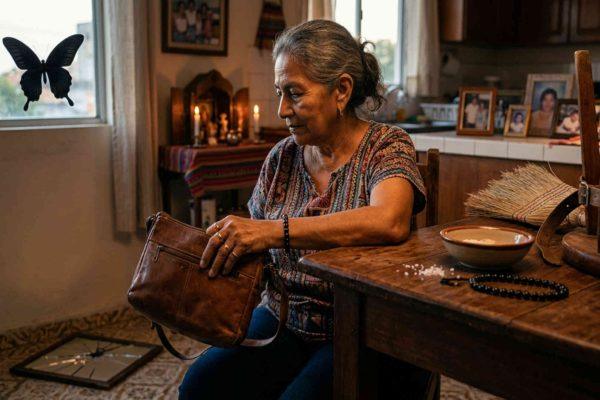
One of the most widespread superstitions across Latin America warns against placing a purse, wallet, or bag directly on the ground. The reasoning is simple but powerful: doing so symbolizes a lack of respect for money, and wealth will literally slip away under the door. In countries like Perú and Venezuela, this belief is taken so seriously that mothers will scold children for dropping a backpack on the floor, equating it with financial carelessness.
Similarly, breaking a mirror is said to bring seven years of bad luck—a notion that traces back to ancient times when polished surfaces were thought to trap the soul. In many Latino homes, this superstition is not just a warning but a genuine source of anxiety, especially when a cherished family mirror shatters during a holiday gathering.
Brooms, Feet, and Romantic Destiny
Another deeply held belief involves brooms. If you sweep someone's feet with a broom, you are supposedly condemning them to remain single or to marry someone much older. This superstition is particularly common in Cuba, Puerto Rico, and the Dominican Republic, where sweeping is seen as a ritual that can cleanse or curse a person's romantic future. The broom itself is considered a tool that can remove not just dirt but also spiritual energy, so using it carelessly can have unintended consequences.
For many Latinos living in the United States, these superstitions serve as a direct link to their cultural heritage. As younger generations rediscover the meanings behind their grandmother's warnings, they find a sense of continuity and identity. The practice of avoiding a broom touching someone's shoes, for instance, becomes a small but meaningful act of cultural preservation.
Nature's Omens: Black Butterflies and Ringing Ears
Superstitions in Latin America also extend to natural phenomena. A sudden ringing in the ear is interpreted as a sign that someone is speaking ill of you behind your back. This belief is common in México and Central America, where it is often met with a quick prayer or a muttered curse to neutralize the gossip.
Perhaps no omen is more unsettling than the appearance of a black butterfly inside a home. In many parts of Brazil, Colombia, and Argentina, it is seen as a harbinger of bad news or even death. The butterfly's dark wings are thought to carry messages from the spirit world, and its sudden flight through a room can disrupt the peace of an entire household. While some dismiss it as mere folklore, others take it seriously enough to perform small rituals to ward off misfortune.
These beliefs are not about irrational fear. They are about maintaining a sense of control in a world full of uncertainty. By following these unwritten rules, families create a shared language of protection and care. As the Latino community continues to grow in the U.S., these superstitions remain a vibrant part of the cultural fabric, connecting generations across borders.
For those interested in how other traditions shape Latino identity, our article on Spanglish in Daily Life explores another everyday aspect of bicultural life. And for a look at how Latino workers are navigating economic challenges, see our coverage of the proposed $25 minimum wage bill.