Every footballer knows the risk. One mistimed tackle, one awkward landing, and a career can be over in an instant. While the sport celebrates goals, trophies, and glory, there's a darker side that players carry with them from their earliest days on the pitch. The fear of a career-ending injury is a constant companion, and for some, that fear became a brutal reality.
We've compiled the 10 most horrific injuries in football history, focusing not just on the physical trauma but on the cruel timing that derailed promising careers and forced athletes into grueling rehabilitation battles. These stories are a reminder of the fine line between competitive aggression and devastating harm.
From Broken Bones to Career-Ending Blows
The list spans decades and continents, from the Spanish league to the English Premier League. Each case left an indelible mark on the sport and its fans.
- 10. Manuel Pablo (Deportivo de La Coruña): In 2001, during a Galician derby against Celta Vigo, the defender suffered a broken tibia and fibula after a challenge from Everton Giovanella. The injury came at the peak of his career, and he never fully regained his explosive form.
- 9. Alfie Haaland (Manchester City): The Norwegian midfielder was forced into early retirement after a notorious studs-up tackle from Roy Keane in 2001. The challenge, which Keane later admitted was deliberate, ended Haaland's career and sparked a lasting feud.
- 8. Sergio Asenjo (Atlético Madrid): The goalkeeper endured four separate ACL tears between 2001 and 2017, spending over a thousand days on the sidelines. His resilience was remarkable, but the repeated injuries ultimately limited his potential.
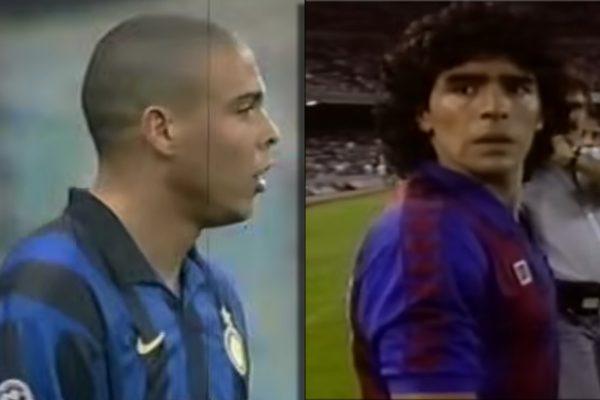
- 7. Diego Maradona (Barcelona): In 1983, the Argentine legend was sent to the operating room after a brutal tackle from Athletic Bilbao's Andoni Goikoetxea, known as the "Butcher of Bilbao." Maradona suffered a broken ankle and torn ligaments, but he returned to lead Argentina to World Cup glory three years later.
- 6. Ronaldo Nazario (Inter Milan): The Brazilian phenomenon suffered a complete patellar tendon rupture during the 2000 Coppa Italia Final against Lazio. The injury forced him to reinvent his game, transforming from a explosive dribbler into a clinical finisher. He returned to win the World Cup in 2002, but his prime was forever altered.
- 5. César Jiménez (Real Zaragoza): In 2005, the defender was forced into retirement at age 30 after a dangerous challenge from Luis Figo. The tackle caused a compound fracture and subsequent infections that ended his career.
- 4. Eduardo da Silva (Arsenal): The Croatian striker suffered a horrific left fibula fracture in 2008 after a tackle from Birmingham City's Martin Taylor. The injury was so severe that it required multiple surgeries and ended his time at the top level.
- 3. Petr Čech (Chelsea): In 2006, the goalkeeper suffered a severe skull fracture after colliding with Reading's Stephen Hunt. The injury changed safety protocols forever, and Čech wore a rugby-style headguard for the rest of his career.
- 2. David Busst (Coventry City): The defender suffered multiple compound fractures in a challenge with Manchester United's Denis Irwin in 1996. The injury was so graphic that goalkeeper Peter Schmeichel vomited on the pitch. Busst required 26 surgeries and never played again.
- 1. Ewald Lienen (Arminia Bielefeld): In 1981, the German midfielder suffered a 25-centimeter open thigh wound after a tackle from Norbert Siegmann. The injury exposed bone and muscle, and Lienen's career was effectively over.
The Human Cost and the Fight for Safety
These injuries are more than just statistics. They represent the end of dreams, the loss of livelihoods, and the physical and mental toll on athletes. For players like Ronaldo Nazario, the injury forced a tactical reinvention. For others, like César Jiménez and David Busst, it meant the end of their careers entirely.
The incidents also sparked crucial changes in the sport. Petr Čech's skull fracture led to mandatory head injury protocols and the widespread adoption of protective headgear. The brutal tackles of the past are now more likely to be flagged by VAR and punished with red cards. But the debate about player safety continues, especially in leagues where physical aggression is still celebrated.
For Latino fans, these stories resonate deeply. Many of the players affected—Maradona, Ronaldo, Eduardo da Silva—are icons in Latin America. Their injuries remind us of the fragility of greatness and the importance of protecting the artists who make football beautiful. As the sport evolves, we must never forget the human cost behind the highlights.