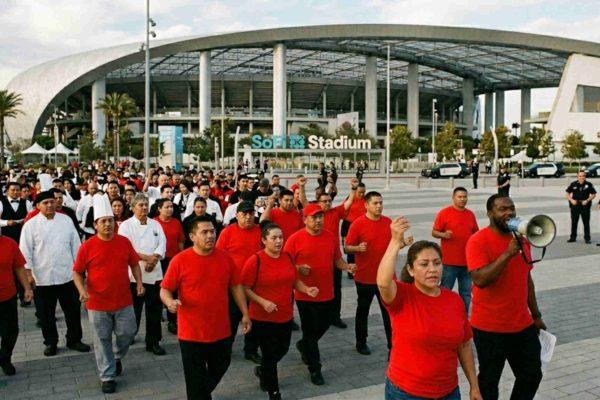
Just one week before the 2026 World Cup kicks off at SoFi Stadium in Inglewood, California, nearly 2,000 hospitality workers—cooks, bartenders, and servers—are voting on whether to authorize a strike that could disrupt the tournament's opening match between the United States and Paraguay on June 12. The workers, represented by Unite Here Local 11, have been without a contract for over a year and say negotiations with Legends Global, the stadium's food-service operator, have stalled.
The union is pushing for wage increases above $30 an hour, along with stronger protections against subcontracting and job losses due to automation. Workers argue that the current proposals don't reflect the rising cost of living in Southern California or the scale of a global event like the World Cup. As one union representative put it, “We're not asking for the moon—we're asking for a fair share of the revenue this tournament will generate.”
FIFA's Data Demands Spark Privacy Concerns
Beyond wages, the union has raised alarms about FIFA's new accreditation policies, which require all stadium personnel to provide sensitive personal data, including fingerprints and Social Security numbers. Unite Here Local 11 has filed a formal complaint with the California Department of Justice, arguing that sharing this information with agencies like the Department of Homeland Security or ICE could endanger workers, especially immigrants. FIFA insists the measures are for security and that data will be deleted after the tournament, but the union remains skeptical.
This dispute echoes broader concerns about worker rights and privacy in the lead-up to the World Cup. Similar tensions have emerged in other host cities, as highlighted in our coverage of extreme heat threats at 2026 World Cup stadiums, where labor and safety issues intersect.
The two-day vote, which began today, could result in picket lines outside the 70,000-seat venue on match day. While Legends Global has stated its commitment to good-faith negotiations, union leaders warn that a strike would create a tense atmosphere for fans. “We want to serve the fans and showcase our city, but not at the expense of our dignity,” said a veteran cook at the stadium.
For the Latino community, which makes up a significant portion of both the workforce and the fan base, this strike is personal. Many workers are immigrants from México, El Salvador, and Guatemala, and they see the fight as part of a larger struggle for economic justice. The outcome of this vote could also influence labor actions at other World Cup venues, as seen in the historic wage hike secured by New York hotel workers earlier this year.
Results are expected by the end of the week. If the strike is authorized, union leaders will decide whether to walk out, potentially disrupting one of the most anticipated sporting events of the year. For now, fans and organizers alike are watching closely, hoping for a resolution that keeps the focus on the beautiful game.