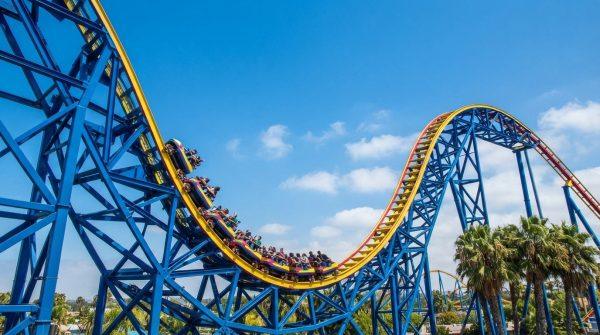
For nearly two decades, the X2 roller coaster at Six Flags Magic Mountain in Valencia, California, was a rite of passage for thrill-seekers across the Southwest. Since its debut in 2002 and a dramatic relaunch in 2008, the ride carried more than 16 million passengers. But on a recent Tuesday, park officials confirmed what many riders and safety advocates had long suspected: the iconic attraction is closing for good.
The decision follows a joint investigation by local media and safety groups that documented at least 20 distinct incidents, including severe brain injuries, emergency surgeries, and multiple deaths. Attorneys representing affected families filed lawsuits alleging that the park failed to address recurring safety failures. Court documents reviewed during the inquiry reveal that Six Flags executives had accumulated more than 70 reports of head and neck injuries among passengers, yet the ride continued operating until public pressure and legal action forced a shutdown.
Why X2 became a safety concern
X2 was never an ordinary coaster. It was a fourth-dimensional ride, with seats that rotated independently of the track, subjecting riders to extreme G-forces and sudden, whip-like movements. Medical specialists who reviewed the incident reports compared the injuries to those seen in high-speed car crashes. "The forces on X2 were unlike anything else in the park," said Dr. Elena Ramírez, a neurologist at UCLA who testified in one of the lawsuits. "The brain is not designed to handle that kind of acceleration and rotation, especially for riders with underlying conditions."
The investigation uncovered cases of young adults who suffered subdural hematomas after riding, requiring emergency craniotomies. In one particularly tragic case, a 29-year-old man from Bakersfield died two days after riding X2, with autopsy reports citing traumatic brain injury. Families of the victims have accused state inspectors of relying too heavily on data provided by the company itself, without interviewing eyewitnesses or conducting independent biomechanical tests.
Official announcement and public reaction
In a statement, Six Flags Magic Mountain president said, "After nearly 20 years, we have decided to permanently retire X2. The safety of our guests is our highest priority, and we believe this is the right decision for our park and our community." The announcement was met with mixed emotions. For many Latino families in Southern California, X2 was a shared memory—a place where quinceañera groups, family reunions, and first dates unfolded against the backdrop of loops and inversions. But for the families of the injured and deceased, the closure is long overdue.
"My son went to Six Flags for his 16th birthday," said María González, whose son suffered a neck injury on X2 in 2019. "He came home with a headache that never went away. We spent months in therapy. No roller coaster is worth that." González is part of a class-action lawsuit against the park, backed by civil rights organizations that argue the company prioritized profits over people.
Industry-wide implications
The closure of X2 is not just a local story. Industry analysts at Amusement Today note that this marks a historic shift in how theme parks approach operational risk. "This is the first time a major coaster has been permanently retired due to safety concerns rather than mechanical failure," said analyst James Park. "It will force every park in the country to re-examine their own rides."
Six Flags has announced that the space formerly occupied by X2 will be transformed into new recreational areas, free of biomechanical risks. The company is also implementing independent supervision protocols across its 15 other facilities, and engineers are evaluating new technical regulations to tighten preventive controls on all high-speed attractions. Legal experts anticipate multimillion-dollar out-of-court settlements with the families of those killed or injured.
For the Latino community, which makes up a significant portion of the park's visitors, this story resonates beyond the headlines. It's a reminder that safety should never be sacrificed for a thrill. As the investigation continues, one thing is clear: the roar of X2 will be replaced by a quieter, more cautious era in amusement park history.