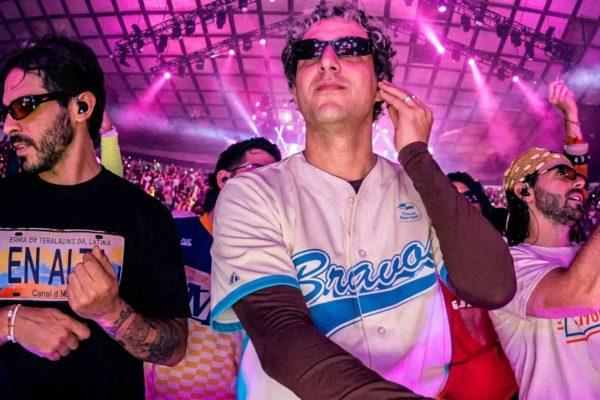
When Rawayana sat down with Live Nation executives, they didn't bring a flashy stage design or a viral gimmick. They brought a simple screen presentation. That pitch, they revealed during Billboard Latin Music Week in Miami Beach, became the foundation for their first major international arena tour, ¿Dónde Es El After?, with 23 confirmed dates across the United States.
For a band that started in Caracas with no industry infrastructure, this is more than a milestone—it's a testament to what happens when talent meets relentless self-belief. Guitarist Alberto “Beto” Montenegro and drummer Andrés “Fofo” Story joined Live Nation reps on stage to explain how they built the tour independently, from concept to routing, before bringing in the global promoter. The result: a run that hits New York, Los Angeles, Chicago, and Miami, where the tour wraps with three consecutive nights.
From Caracas classrooms to U.S. arenas
Rawayana's story is deeply rooted in the Venezuelan experience. The band formed in 2010 among college friends in Caracas, where professional music infrastructure was scarce. That scarcity, they say, forced them to become their own producers, managers, and booking agents. They learned the business by doing it, often making mistakes, but always moving forward.
Their sound—a blend of funk, reggae, and Caribbean rhythms—owes a debt to Venezuelan pioneers like Los Amigos Invisibles and Puerto Rico's Cultura Profética. But Rawayana never tried to copy anyone. Instead, they kept their essence intact: playful lyrics, infectious grooves, and a live show that feels like a party with old friends.
That authenticity has connected with audiences far beyond Venezuela. Their U.S. tour is a celebration of Latin American culture, a space where fans from different countries come together under one roof. As the band puts it, every concert is a gathering of the Latino community, a chance to feel at home even miles away from home.
Innovation, recognition, and giving back
Rawayana's recent album earned them a Latin Grammy nomination for Album of the Year, a first for the band. It's a recognition that validates their evolution, but they haven't let it change their approach. They continue to experiment, blending genres and collaborating with artists across the region.
Their success has also come with a sense of responsibility. After the earthquakes that hit Venezuela in 2023, the band donated $100,000 to community recovery efforts. It's a gesture that speaks to their roots and their commitment to their homeland, even as they build a career on the road.
For fans of Latin music, Rawayana's rise is a source of pride. It shows that independent artists can break through, that a clear vision can open doors, and that the Caribbean spirit can fill arenas. As they continue their tour, they're not just playing shows—they're proving that dreams, no matter how ambitious, are worth chasing.
For more on the intersection of music and identity, check out how Feid turned Medellín slang into a global hit and Cuco's DIY path from a Hawthorne bedroom.