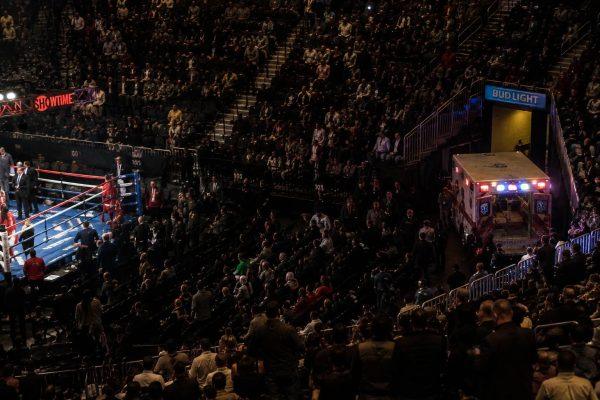
Boxing has given us some of the most electrifying nights in sports—moments of raw courage, technical brilliance, and sheer will. But beneath the roar of the crowd and the flash of the cameras lies a darker reality: the ring can exact a price no victory can repay. Across generations, from the United States to Puerto Rico to Argentina, fights have ended not with a raised hand but with a life cut short, leaving families, fans, and the sport itself to grapple with the aftermath.
These are not just statistics. They are stories of athletes who stepped between the ropes knowing the risks, and of the people around them—trainers, referees, doctors—who had to make split-second decisions with irreversible consequences. Here are five bouts that shook boxing to its core and forced a reckoning that still echoes today.
Davey Moore vs. Sugar Ramos: A title fight that transcended the ring
On March 21, 1963, at Dodger Stadium in Los Angeles, American featherweight champion Davey Moore defended his belt against Cuban-born Ultiminio “Sugar” Ramos. Ramos, a product of Havana’s storied boxing tradition, dropped Moore in the tenth round, and the referee stopped the fight. Moore walked back to his corner, spoke to reporters, and seemed okay. But within hours, his condition deteriorated. Emergency brain surgery followed, and days later, at just 29, Moore was gone.
The tragedy reverberated far beyond the sport. Bob Dylan immortalized it in his song “Who Killed Davey Moore?”, a haunting ballad that asked a question boxing still struggles to answer: when a fighter dies, who is responsible? The fight became a catalyst for safety reforms, but it also left an indelible mark on how the public viewed the sweet science.
Maxim Dadashev vs. Subriel Matías: When a trainer’s call wasn’t enough
Fast-forward to July 2019. Russian junior welterweight Maxim Dadashev, undefeated at 13-0, faced Puerto Rico’s Subriel Matías in a fight that would become one of the sport’s most painful modern chapters. Matías, a relentless pressure fighter from Fajardo, hammered Dadashev with punishing shots to the head and body. By the 11th round, Dadashev’s corner had seen enough. Trainer Buddy McGirt, a former champion himself, made the call that fighters often refuse to make: he stopped the fight.
But it was too late. Dadashev collapsed on the way to the dressing room, vomiting and losing consciousness. He was rushed to the hospital, where doctors found a subdural hematoma. Four days later, at 28, he was dead. McGirt later said the loss felt like losing a family member. The fight became a stark reminder that a corner’s duty is not just to win, but to protect—even from the fighter’s own instinct to continue.
Jimmy Doyle vs. Sugar Ray Robinson: A premonition that became reality
Some tragedies feel almost scripted. In 1947, Sugar Ray Robinson, widely considered the greatest boxer of all time, was preparing to defend his welterweight title against Jimmy Doyle. Robinson later claimed he had a dream in which Doyle died in the ring. He reportedly tried to withdraw, but was persuaded to go through with it. The fight took place, and in the eighth round, Robinson knocked Doyle out. Doyle never regained consciousness and died the next day.
Robinson carried that weight for the rest of his life. The victory, one of the most dominant of his career, was forever shadowed by the loss of a young man who had dreamed of the same glory. The story remains one of boxing’s most haunting—a reminder that the sport’s greatest triumphs can come at a cost no champion should have to bear.
Hugo Santillán vs. Eduardo Abreu: A second death in the same week
Just two days after Dadashev’s death, boxing was hit again. Argentine fighter Hugo Alfredo “Dinamita” Santillán, only 23, faced Uruguay’s Eduardo Javier Abreu in Buenos Aires. The fight went the distance and ended in a draw. As the judges’ scores were being read, Santillán began to lose consciousness. He was rushed to the hospital, where surgery revealed a blood clot in his brain. He died five days later.
The fact that Santillán finished the fight—and even heard the final bell—made the tragedy all the more jarring. It underscored how a fighter can absorb damage that isn’t immediately visible, and how the sport’s most dangerous moments can happen after the applause has faded.
Patrick Day vs. Charles Conwell: A victory neither man wanted
Less than three months later, on October 12, 2019, in Chicago, junior middleweight Patrick Day faced undefeated prospect Charles Conwell. Day had been knocked down in the fourth and eighth rounds, but he kept getting up. In the tenth, Conwell landed a combination that sent Day crashing to the canvas, his head bouncing off the mat. He never regained consciousness. Four days later, at 27, Day died at Northwestern Memorial Hospital.
What followed was a rare glimpse into the psyche of the survivor. Conwell wrote an open letter to Day while he was still in the hospital, saying he couldn’t stop replaying the fight and wished he could undo it. Months later, he admitted he questioned whether he wanted to continue boxing at all. The tragedy wasn’t just Day’s—it was Conwell’s, and it laid bare the emotional toll that fatal bouts take on the opponent who has to live with the result.
Prichard Colón: A name that still haunts the sport
No conversation about boxing tragedies is complete without mentioning Prichard Colón, the Puerto Rican fighter whose life was forever altered after a 2015 bout. Colón, a promising junior middleweight from Toa Baja, faced Terrel Williams in a fight that ended in disqualification after Colón was repeatedly hit with illegal punches. But the damage was done. Colón collapsed after the fight and underwent emergency brain surgery. He spent years in a coma-like state, and in 2025, he passed away at 33. His story became a rallying cry for stricter safety measures and a painful reminder of the sport’s fragility.
These five fights—spanning 1947 to 2019—are not isolated incidents. They are part of a pattern that boxing has spent decades trying to address. From the highest-paid Latino athletes to the unknown journeymen, every fighter who steps into the ring accepts a risk that no amount of money or glory can erase. The question that lingers is not whether boxing can be made completely safe—it can’t—but whether the sport is willing to do everything in its power to protect those who give it everything they have.