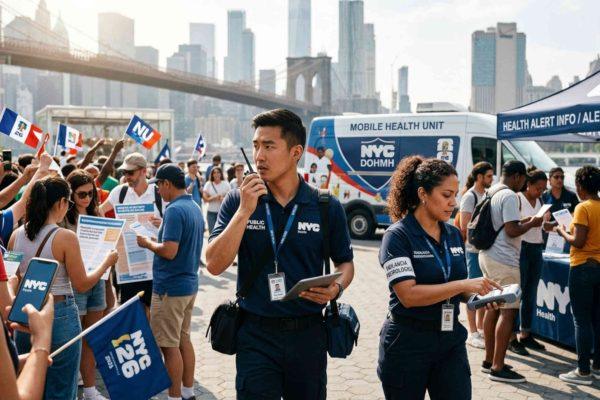
With the 2026 World Cup set to bring over a million visitors to the New York metropolitan area, health authorities in New York and New Jersey are activating a massive public health operation starting June 1. The goal is to shield both residents and fans from a range of risks—from infectious diseases and foodborne illnesses to the dangers of intense summer heat waves—during the eight matches scheduled at MetLife Stadium in East Rutherford, New Jersey.
The scale of the event demands a response that reaches across all five boroughs of New York City and stretches into New Jersey, integrating local, state, and federal agencies into a coordinated safety net. According to city experts, the impact of this operation will be felt far beyond the stadium, as the region braces for the influx of soccer fans from across the Americas and the world.
Surveillance and Prevention at the Forefront
The New York City Department of Health has launched a prevention strategy that urges everyone—residents and visitors alike—to keep their vaccinations up to date and practice basic hygiene in crowded indoor spaces. Since the global movement of fans during the FIFA 2026 World Cup can easily introduce new infectious agents, health officials recommend wearing masks in high-density indoor areas and monitoring personal health to avoid overwhelming local medical services.
This action plan includes multilingual informational campaigns and enhanced training for all medical personnel, ensuring that any suspected illness receives rapid attention through direct communication channels open to the public. The goal is to turn soccer fervor into a safe celebration, not a health crisis.
For those concerned about broader health trends, experts point to resources like how cutting added sugar can transform your metabolic health, a reminder that preventive care starts long before the tournament.
Regional Coordination and Digital Innovation
New Jersey is modernizing its patient assignment system ahead of the World Cup, replacing slow manual methods with a more coordinated digital approach. Through close collaboration between the Department of Health, the New York State Police, and emergency management offices, officials have established predetermined guidelines that allow hospitals to act with precision during a mass emergency, drastically cutting response times.
This synergy between agencies not only aims to mitigate immediate dangers during the tournament but also leaves a lasting legacy of technical preparedness for future events. It proves that effective cooperation between local, state, and federal governments is the most powerful tool to protect the well-being of the global community gathering around soccer.
Fans looking to make the most of their trip can explore New Jersey's Welcome World Rewards program, which lets visitors earn points and win World Cup tickets by exploring local businesses. Meanwhile, those considering a move across the Hudson might find relief in the Jersey City rent drop that offers NYC tenants a lifeline.
As summer approaches, New York City is also reopening its public beaches with major safety upgrades, detailed in this report on NYC beach safety. And with a recent measles alert at LAX, health vigilance remains a national priority—see the measles alert at LAX for context.
For Latino fans, many of whom will travel from countries like México, Argentina, Colombia, and Brazil, this health operation is a reminder that the World Cup is more than a sporting event—it's a gathering of cultures. The region's diversity will be on full display, and the health infrastructure is being built to honor that by keeping everyone safe.