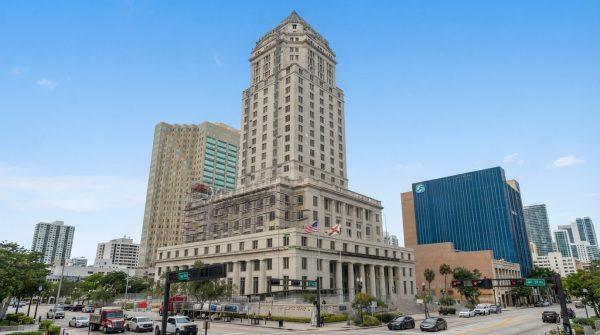
Miami's historic courthouse, a downtown landmark that has stood since 1928, may soon be getting a very tall neighbor. After a county auction for the property failed to attract any bidders, developer Russell Galbut has stepped forward with an ambitious plan: build a 70-story residential tower right next to the old building, using the tax revenue from the new skyscraper to fund the courthouse's preservation forever.
The courthouse, known for its pyramid-topped tower and the nickname "Cielito Lindo," has been a fixture on Flagler Street for nearly a century. It's where Al Capone once stood trial, and its Art Deco facade is a beloved piece of Miami's architectural heritage. But for decades, the building has struggled to pay for its own upkeep. The county has been looking for a way to keep the landmark alive without draining public coffers, and Galbut's proposal is the latest—and most dramatic—idea on the table.
A bold plan to save a landmark
Galbut's company, GFO Acquisitions, has submitted a detailed proposal to Miami-Dade County. The plan calls for a slender tower, just 70 feet wide, to rise directly beside the courthouse. The tower would include hotel rooms, offices, and even a speakeasy at the top—a nod to the building's Prohibition-era past. But the heart of the deal is financial: all property taxes generated by the new tower would be earmarked exclusively for the restoration and perpetual maintenance of the historic courthouse. Standard city and school board taxes would remain untouched, according to the proposal.
"It links to an economically viable building to preserve the historic building forever," Galbut said in a statement.
The plan also aims to breathe life into a downtown area that often empties out after 5 PM. The ground floor of the courthouse would be opened to restaurants and shops, drawing pedestrians and creating a more vibrant streetscape. For a city that's seen a cultural revival in its Financial District, this could be another step toward making downtown Miami a round-the-clock destination.
A failed auction and a rival offer
The county had hoped to sell the courthouse through a public auction, but the process dragged on with multiple extensions, finally closing on October 25 with zero bids. That's when Galbut stepped in. But he's not the only one interested. Developer Moishe Mana, through his Fortuna Group Enterprises, has offered $5 million to convert the courthouse into art galleries and cultural spaces—without building anything new. Mana's vision is more low-key, but Galbut's plan promises a much larger private investment, which could cover the high costs of structural conservation that the county can't afford on its own.
Real estate experts are now studying the potential impact of a 70-story tower on the courthouse's iconic steps and northern facade. The design is meant to be slim and unobtrusive, but any skyscraper next to a historic landmark is bound to raise eyebrows. Preservation groups are watching closely, noting that even renting out the unused 28-story tower adjacent to the courthouse wouldn't cover ongoing maintenance costs. That's why Galbut's tax-revenue model is so appealing—and so unprecedented.
The county commission will need to negotiate the terms carefully before approving any deal. Transparency will be key, especially when it comes to the disposition of public assets. But if the plan goes through, it could set a precedent for other cities struggling to preserve historic buildings with limited public funds. As Miami continues to attract billionaires and developers—thanks in part to Florida's tax-friendly climate—the courthouse could become a model for how to marry preservation with development.
For now, the future of the Miami courthouse hangs in the balance. The county is reviewing the proposal, and a final decision could come in the coming months. If approved, the tower would rise alongside a piece of Miami's history, ensuring that the old courthouse—and its stories—live on for generations to come.