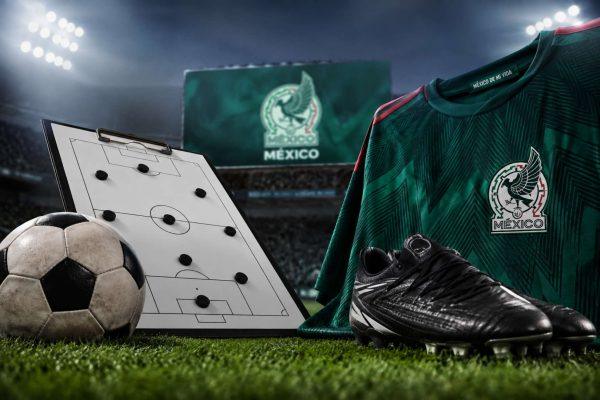
As the 2030 World Cup approaches, the Mexican National Team is quietly entering a new era. For over a decade, the No. 9 shirt has been synonymous with a select group of forwards—Oribe Peralta, Javier Hernández, Carlos Vela, and most recently Raúl Jiménez. But with Jiménez now in his mid-30s and playing his club football in England, the coaching staff knows the time to build for the future is now.
The transition won't happen overnight. Jiménez remains a key figure, but the next generation is already knocking. From the Liga MX to Europe, a handful of strikers are staking their claim to lead El Tri's attack in the 2030 tournament, which will be co-hosted by Mexico, the United States, and Canada.
The leading contender: Santiago Giménez
At 25, Santiago Giménez is the most obvious heir. After a standout spell at Feyenoord and a recent move to FC Porto, the former Cruz Azul forward has the technical quality and European pedigree to anchor Mexico's frontline for years. His international goal tally hasn't quite matched his club output yet, but his movement, finishing, and ability to link play make him the frontrunner.
Giménez's challenge will be consistency on the international stage. He's shown flashes of brilliance, but the pressure of wearing the No. 9 for a nation with high expectations is a different beast. If he can translate his club form into decisive performances for El Tri, the job is his to lose.
Domestic and European options
Behind Giménez, the competition is fierce. Germán Berterame, the naturalized Mexican now playing for Inter Miami in MLS, offers a mature, versatile option. At 27, he's in his prime and brings a proven goalscoring record. His ability to play across the front line gives the coach tactical flexibility, and his experience in both Liga MX and MLS makes him a reliable backup.
Armando González, nicknamed "La Hormiga," is another name to watch. The 23-year-old recently completed a high-profile move to Olympiacos after impressing with Chivas Guadalajara. His sharp instincts in the box have drawn comparisons to Javier Hernández, and his time in Europe will be crucial for his development. González has already earned minutes in the national team setup, and a strong season in Greece could solidify his place in the conversation.
Then there's Ali Ávila, a product of Monterrey's academy now plying his trade with Gallos Blancos de Querétaro. Ávila is a physical presence, strong in the air and tactically astute inside the penalty area. His challenge is consistency—he needs to deliver week in, week out in Liga MX to force his way into the national team picture.
Patricio Salas is the wildcard. The 22-year-old, developed in Club América's youth system, has just secured a move to FC Famalicão in Portugal's top flight. His link-up play has drawn comparisons to Henry Martín and Raúl Jiménez, and the European move is a perfect platform to accelerate his growth. If he adapts quickly, he could be a surprise contender for 2030.
Beyond the frontrunners
The pipeline doesn't stop there. Emerging talents like Luis Puente, Oswaldo Virgen, Mateo Levy, Tahiel Jiménez, and Stephano Carrillo are all on the radar. Their progression through domestic and international leagues will determine who ultimately gets the nod. The competition is healthy, and it's exactly what Mexico needs as it looks to build a squad capable of making a deep run on home soil.
For now, the focus is on the immediate future. The next World Cup cycle will be a test of depth and adaptability. As the coaching staff evaluates options, the message is clear: the No. 9 shirt is up for grabs, and the next great Mexican striker is already emerging.
For more on the national team's evolution, check out our coverage of Chivas' recent form and Armando González's balancing act.