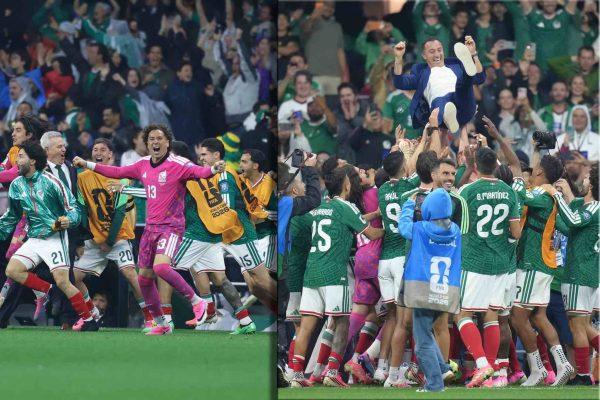
Mexico's national team has officially punched its ticket to the Round of 16 of the 2026 FIFA World Cup, sparking celebrations from Mexico City to Chicago and setting off a wave of analysis about what comes next. For a squad that has long carried the weight of a nation's hopes, this is more than just another match—it's a chance to break through the ceiling that has held El Tri back in recent tournaments.
The coaching staff, led by the Tricolor's manager, is already studying the bracket. Based on the tournament's structure, Mexico's most likely opponents will come from the heavyweights of South America and Europe. Think Brazil, Argentina, Germany, or France—teams that demand flawless execution. The team's analytics department has deployed scouts to gather video footage and biometric data on these potential rivals, tailoring defensive plans for each scenario.
When and Where Will Mexico Play?
FIFA has set the Round of 16 match for the first week of July 2026. The primary venue is the legendary Estadio Azteca in Mexico City, which seats 83,000 fans and has been the stage for some of the most iconic moments in Mexican football history. The backup option is AT&T Stadium in Arlington, Texas, with 80,000 seats and a prime-time broadcast slot. The final decision depends on Mexico's position in the tournament's coefficient ranking after the group stage.
For fans, this means planning a trip to either the heart of Mexico or the Dallas-Fort Worth metroplex. Both cities are bracing for massive crowds, with hotel bookings and ticket prices already spiking. Secondary market platforms report digital traffic surges, with premium seats costing double what they did in the opening rounds. Local chambers of commerce in both host cities are projecting record economic boosts from the influx of Mexican and international fans.
Potential Opponents: A Look at the Bracket
The Round of 16 bracket pairs Mexico with a team from a group that includes several top-tier UEFA and Conmebol sides. Among the most likely contenders are Argentina, the reigning world champions, and Brazil, always a threat. European powerhouses like Germany and France also loom large. Each presents a unique challenge: Argentina's tactical discipline, Brazil's flair, Germany's efficiency, or France's depth.
Mexico's path won't be easy, but the team has shown resilience. The squad is currently in a high-performance training camp, focusing on physical conditioning and penalty shootouts under simulated pressure. The technical director has emphasized muscle recovery and mental preparation, knowing that the margins in knockout football are razor-thin.
This match is more than a game—it's a chance for Mexico to reach the quarterfinals for the first time since 1986. For a generation of players like Guillermo Ochoa, who recently bid farewell at the Azteca, this is the culmination of years of effort. The entire nation is watching, and the pressure is immense, but so is the opportunity.
As the tournament progresses, keep an eye on the full Round of 16 bracket to see how other Latin American teams are faring. And for those planning to attend, remember that Mexico's knockout road could lead all the way to New York if they advance.