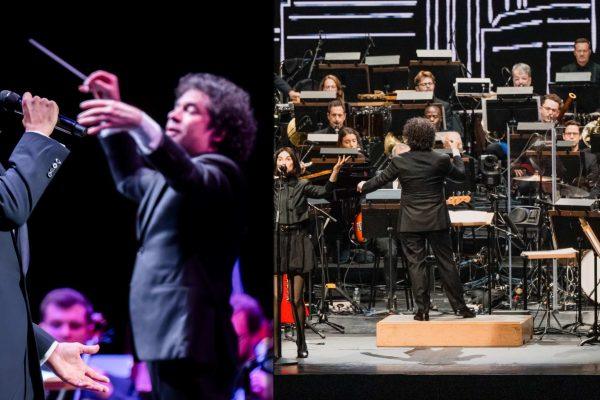
On a balmy Thursday evening in New York City, the marquee of Radio City Music Hall glowed a little brighter than usual. Inside, the New York Philharmonic—an institution that has defined orchestral excellence in the United States for nearly two centuries—ushered in a new era under the baton of Venezuelan maestro Gustavo Dudamel. The 45-year-old conductor, known for his electric energy and deep commitment to making classical music accessible, officially stepped into his role as Music and Artistic Director, a position he will hold for the 2026–27 season and beyond.
Dudamel’s appointment is nothing short of historic. Since the Philharmonic’s founding in 1842, no Latin American has ever held its top musical post. His debut concert, a celebration that blended symphonic grandeur with pop star wattage, marked a cultural milestone not just for the orchestra but for the entire Latino community across the Americas. As he took the stage, the audience—a mix of classical purists, curious newcomers, and proud Venezuelans waving flags—rose to their feet in a standing ovation that felt less like a greeting and more like a homecoming.
A night of musical fusion
The program was a testament to Dudamel’s signature style: fearless, inclusive, and joyfully eclectic. Actor Liev Schreiber hosted the evening, which opened with George Gershwin’s “Strike Up the Band” overture, followed by works from contemporary composers Philip Glass, Jessie Montgomery, and Mexican master Arturo Márquez, whose “Danzón No. 9” brought the rhythms of Veracruz to the Radio City stage. The highlight, however, came when Lizzo, St. Vincent, and Venezuelan singer-songwriter Joaquina joined the orchestra. Joaquina, a Latin Grammy winner, delivered her hits “Pesimista” and “El Alquimista” in Spanish, her voice soaring over the strings. She paused to thank Dudamel, saying, “You make us all proud to be Venezuelan.”
This blend of classical and pop is not new for Dudamel. During his celebrated tenure at the Los Angeles Philharmonic, which began in 2009, he became famous for collaborations with artists like Herbie Hancock and Katy Perry. His farewell to LA was a tearful, triumphant affair, and now he brings that same spirit to the East Coast. As he told the audience, “Music is not a luxury; it is a necessity. It belongs to everyone.”
More than a concert: a cultural statement
Dudamel’s debut was more than a performance—it was a declaration. For generations, Latin American musicians have been the backbone of orchestras across the U.S., yet leadership roles have remained stubbornly exclusive. Dudamel’s rise, from the youth orchestra system of Venezuela known as El Sistema to the pinnacle of the classical world, is a story of talent, persistence, and the power of community. His presence at the Philharmonic signals a shift, not just in who leads, but in how orchestras see their audiences. He has promised to expand the Philharmonic’s reach into all five boroughs, partnering with schools and community centers to bring music to those who might never step inside Lincoln Center.
The Radio City concert was the first public glimpse of that vision. But the real work begins now. On September 24, Dudamel will lead his first subscription concert at David Geffen Hall, the Philharmonic’s home base. The program includes John Adams’ “On the Transmigration of Souls,” a haunting tribute to the victims of 9/11, paired with Prokofiev’s Fifth Symphony. It’s a weighty choice, one that speaks to Dudamel’s belief that music can heal and unite.
Looking ahead: Europe and beyond
In October, Dudamel will take the orchestra on its first international tour under his leadership, with stops in Paris, Barcelona, Madrid, Berlin, Hamburg, and Vienna. For a conductor who grew up in Barquisimeto, Venezuela, leading one of the world’s great orchestras through Europe’s most storied concert halls is a dream realized. But he remains grounded. In interviews, he often speaks of his mother, a voice teacher, and the mentors who believed in him when he was a teenager wielding a baton for the first time.
Dudamel’s debut is a moment of pride for Latinos everywhere, but it’s also a reminder that our cultures are not monolithic. From the danzón of México to the salsa of Puerto Rico to the joropo of Venezuela, the music of our Americas is rich and varied. Dudamel’s programming reflects that diversity, and his leadership promises to bring it to the world stage. As he said in a recent interview, “We are not just playing notes; we are telling stories. And every story deserves to be heard.”
For those who missed the Radio City spectacle, the Philharmonic has announced a series of community concerts and open rehearsals throughout the season. Dudamel is determined to make this orchestra feel like it belongs to everyone—not just the elite. And if his first night is any indication, he’s well on his way.