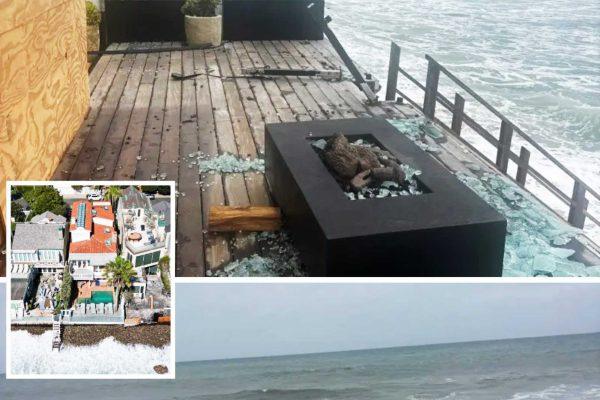
The private, gated enclave of Malibu Colony has long been a symbol of Hollywood glamour, where oceanfront estates belong to some of the most recognizable names in entertainment. But this winter, the Pacific is making its presence felt in ways that money can't easily fix. A series of powerful king tides, intensified by Tropical Storm Rachel, has battered the community's shoreline, dismantling decks, shattering glass doors, and pushing sand deep into living rooms. The damage is not just physical—it's beginning to reshape the very economics of owning a piece of California's most coveted coastline.
For residents like Oscar-winning director Spike Jonze and Red Hot Chili Peppers bassist Flea, the timing couldn't be worse. Jonze's Cape Cod-style estate, listed at $18 million, and Flea's oceanfront property, recently discounted, are both struggling to attract buyers. Real estate agents in the area report a growing hesitation among potential investors, many of whom are now asking pointed questions about climate risk, insurance costs, and the long-term viability of living so close to the water.
A market frozen by uncertainty
The stagnation in Malibu Colony's luxury market is a stark contrast to the frenzy that once defined it. Just a few years ago, oceanfront homes here would sell within days, often above asking price. Now, listings sit for months, and even significant price cuts aren't enough to overcome the anxiety. "Buyers are doing their homework," says a local realtor who asked to remain anonymous. "They're looking at flood maps, fire risk zones, and insurance premiums. The glamour of the address is no longer enough to justify the risk."
This shift is part of a broader trend along the Southern California coast, where extreme weather events are becoming more frequent and more destructive. The king tides that have flooded streets in South Florida are a reminder that this isn't a localized problem. But in Malibu, the combination of coastal erosion, wildfire threats, and the sheer value of the real estate makes the stakes particularly high.
Wildfires and king tides: a double threat
Adding to the uncertainty is the region's perennial wildfire risk. The Santa Ana winds, which typically arrive in the fall and winter, can turn the dry canyon landscapes surrounding Malibu into tinderboxes. The recent wildfire that spread through Malibu served as a stark reminder of how quickly the landscape can change. For homeowners, this means not only protecting against water damage but also ensuring their properties are defensible against fire—a costly and ongoing challenge.
Oceanographers are predicting at least three more king tide cycles before the end of the year, coinciding with the winter full moons. Each surge brings the potential for more flooding, more erosion, and more damage to already vulnerable structures. For residents, the question is no longer if the next big wave will hit, but when—and how much it will cost to repair.
Rethinking luxury in a changing climate
The crisis in Malibu Colony is forcing a broader conversation about what luxury means in an era of climate change. High-net-worth buyers are increasingly prioritizing resilience over aesthetics. They want homes built to withstand storm surges, with reinforced foundations, flood-proof windows, and comprehensive environmental insurance. They're also looking at the long-term stability of the land itself, avoiding properties that sit on eroding cliffs or in known flood zones.
This shift is evident in the types of questions buyers are asking. Instead of asking about the view or the celebrity neighbors, they're asking about elevation, drainage systems, and the history of insurance claims. "It's a completely different mindset," says the realtor. "People are thinking about this as a long-term investment, not just a trophy property."
For some, the solution is to look elsewhere. The growing interest in Paris real estate among American buyers is partly driven by a desire for stability—both political and environmental. But for those who remain committed to Malibu, the challenges are only beginning.
The recent cliff collapse near Nicolas Cage's Malibu mansion is another reminder of how fragile this coastline can be. As the ocean continues to rise and storms become more intense, the question is whether even the wealthiest homeowners can keep up with the cost of adaptation.
For now, the residents of Malibu Colony are left to brace for the next king tide, hoping that their investments—both financial and emotional—can weather the storm. But as the waves crash against their decks and the sand creeps into their homes, the message is clear: the era of unchecked coastal luxury is coming to an end.