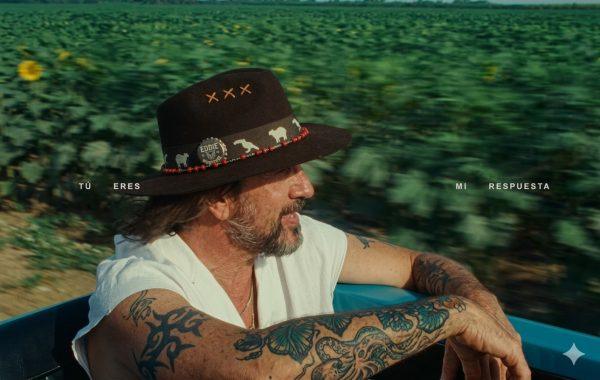
In an era where music videos often rely on slick digital effects and AI-generated polish, Juanes has made a deliberate pivot toward the raw and tangible. The Colombian rock icon’s latest visual piece, “La carta,” was shot entirely on a 1965 Canon Scoopic 16 camera — a choice that feels less like nostalgia and more like a statement.
Directed by Diego Cadavid, who also served as cinematographer, the video marks their fourth collaboration. That accumulated trust allowed both artist and director to take risks that stray far from the polished conventions of commercial music videos. For Cadavid, working with Juanes is an exercise in loyalty to core values; he says that energy translates into every frame.
An analog rebellion in a digital world
The decision to film with vintage equipment is not merely aesthetic. The grain, the natural light, the warmth that analog film captures — these elements create a texture that digital cameras rarely replicate. In a music industry increasingly obsessed with synthetic perfection, Juanes’ choice to return to the organic feels like an act of rebellion. There are no tricks in “La carta”; what you see is a raw narrative, recorded with the intention of capturing human essence without post-production filters that distort reality.
This approach resonates with a broader cultural moment. Many artists today are seeking authenticity in their work, and Juanes, at 53, is no exception. His career has never followed a straight line toward modernity; instead, it moves like a spiral, allowing him to advance while looking back at the past. At this stage, honesty has become his most powerful tool.
Symbolism of emptiness and loss
Filmed between Miami and Homestead, the video immerses viewers in an introspective journey. The most striking image shows a surreal dinner set in the middle of the sea, where Juanes consumes objects like watches and pearls. It’s a powerful metaphor for loss — what remains when you shed possessions and memories? The emptiness is visualized, but treated with an aesthetic delicacy that transforms pain into art.
The song itself, “La carta,” continues the introspective vein Juanes has explored in recent work. It’s a meditation on what we hold onto and what we let go, themes that feel especially resonant in a world where digital clutter often drowns out the intimate. For a bicultural Latino audience, this return to analog roots may also evoke a sense of cultural memory — a reminder that some of the most powerful stories are told with the simplest tools.
Juanes’ move also echoes a broader trend in Latin music, where artists like Rosalía have similarly pushed boundaries by blending the traditional with the avant-garde. While Rosalía brings bruises and breakthroughs to her performances, Juanes brings a quiet, analog honesty to his.
As the music industry continues to chase the next digital innovation, Juanes’ “La carta” stands as a reminder that sometimes the most revolutionary act is to simply look back — and feel.