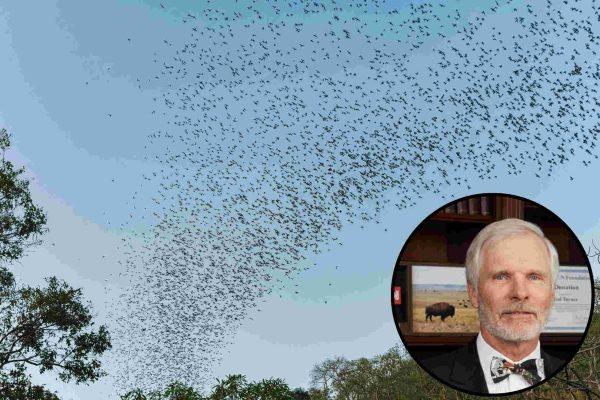
When the sun drops behind the desert hills of southern New Mexico, something extraordinary stirs beneath the ground. On the Armendaris Ranch—a vast property owned by media mogul Ted Turner—ancient lava tubes become the launchpad for one of North America's most spectacular wildlife events. Over a million Mexican free-tailed bats stream out of the volcanic rock in a living, swirling cloud, heading for the night skies above the Río Grande.
For the uninitiated, the scene can feel almost surreal: a dark ribbon of wings rising from what looks like a barren, silent landscape. But for the biologists, conservationists, and local farmers who know this place, the nightly emergence is both a marvel and a vital pulse in the region's ecology.
From mining scars to a protected sanctuary
The story of this underground world is one of damage and recovery. Decades ago, the Jornada caves—part of the same volcanic system—were heavily exploited. Guano mining stripped the caves of their natural balance, and artificial skylights cut into the ceilings disrupted the bats' roosting and breeding cycles. By the mid-20th century, the colony was in serious decline.
But a coalition of environmental groups, university researchers, and Turner's own land management team stepped in. They closed the caves to the public, especially during the sensitive maternity and hibernation seasons, and worked to restore the volcanic rock crevices that the bats depend on. Today, the Armendaris Ranch is a private reserve where the colony has rebounded to over a million individuals—a testament to what focused conservation can achieve.
“This is not just about saving bats,” says a spokesperson for Turner Reserves. “It's about restoring a whole ecosystem that had been degraded by human activity. The bats are the keystone here.”
Nature's pest control for the Río Grande valley
The impact of this colony extends far beyond the ranch's fences. Every night, the bats consume tons of insects, including the corn earworm moth and other pests that threaten commercial crops across the region. This natural pest control saves local farmers millions in potential losses and reduces the need for chemical pesticides—a win for both agriculture and the environment.
For the small farming communities along the Río Grande, the bats are an invisible ally. “We've seen the difference,” says a local grower who has worked the land for decades. “When the bat population is healthy, we use less spray. It's that simple.”
This kind of ecological interdependence is a reminder that conservation isn't just about preserving wilderness for its own sake—it's about maintaining the systems that sustain human life and livelihoods. In a region where water and land are precious, the bats are a quiet but powerful force.
Turner, who has long been known for his environmental philanthropy, seems to have understood this deeply. His reserves across the American West are managed with an eye toward restoring native species and habitats, and the Armendaris Ranch is a flagship example. The success here has even drawn attention from other landowners and conservation groups looking to replicate the model.
For those who get to witness the nightly emergence, the experience is unforgettable. As the last light fades, the bats pour out in waves, their wings beating in a synchronized rhythm that fills the sky. Birds of prey—hawks and falcons—sometimes join the spectacle, swooping in to catch bats mid-flight, a reminder that this is a living, dynamic ecosystem.
The underground world of Ted Turner's ranch is more than a curiosity. It's a living lesson in how human intervention—both harmful and restorative—can shape the natural world. And for the people of New Mexico, it's a nightly show that underscores the value of protecting the wild places we often overlook.