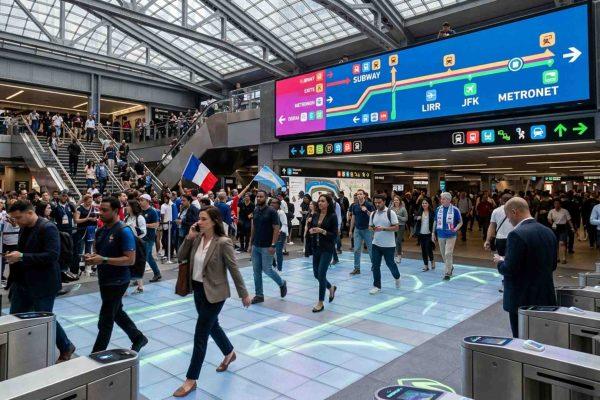
When the 2026 FIFA World Cup kicks off across the Hudson River in New Jersey, New York's Penn Station—already the busiest transit hub in the United States—will face a logistical challenge unlike anything it has seen before. State and city transit authorities have been working on contingency plans for months, but for the millions of daily commuters who rely on this Midtown Manhattan nerve center, the message is clear: adapt your routine or risk getting stuck.
The tournament, which will bring fans from across the Americas and beyond, coincides with the NBA Finals at Madison Square Garden, directly above Penn Station. If the New York Knicks face the San Antonio Spurs in a pivotal Game 6 on June 16, the same evening as a World Cup match between France and Senegal, the station will be tested like never before. Transit officials insist they are ready, but commuters should prepare for delays, platform crowding, and signal slowdowns on the subway lines that feed into the station.
LIRR and Subway: Smart Bypass Routes
For Long Island Rail Road passengers, the best strategy may be to avoid Penn Station entirely on match days. The MTA has expanded service on lines that connect to Grand Central Madison on the East Side and Atlantic Terminal in Brooklyn. These alternative hubs offer a more direct path for workers heading to offices in Midtown or Lower Manhattan, bypassing the crowds that will flood Penn Station's corridors. Subway riders should expect increased frequency on lines that link to stadium shuttle zones, but also prepare for longer wait times and packed platforms.
As one transit planner put it, “the goal is to keep the city moving, not just the fans.” That means commuters from Queens, Brooklyn, and Long Island will need to check real-time alerts and consider shifting their schedules by an hour or two on high-traffic days.
NJ Transit: Strict Restrictions and Reroutes
The most severe operational changes will hit NJ Transit riders. Agency officials have issued firm warnings: avoid non-essential travel on tournament dates. For four hours before each kickoff, train access within Manhattan will be tightly regulated to isolate stadium-bound crowds. After the final whistle, inbound trains will terminate at Newark Penn Station, forcing passengers to transfer to the PATH system to reach New York. Local police will close key cross streets around Penn Station, creating exclusive bus lanes for FIFA shuttle fleets and imposing commercial truck delivery bans throughout Midtown.
For Latino commuters who rely on NJ Transit to reach jobs in Manhattan's restaurants, construction sites, and offices—many from communities in Hudson County, Passaic, and Bergen—these changes could mean longer commutes and added costs. The NY Waterway ferry surcharge already hits Hudson River commuters hard, and the World Cup will only compound the pressure on working-class families.
Balancing World Cup Fever with the NBA Finals
The overlapping mega-events at Penn Station and Madison Square Garden present a unique stress test. State leadership has emphasized that corporate emergency networks are fully optimized to absorb the passenger load, but the reality is that even the best-laid plans can falter under the weight of a million extra visitors. The MTA has promised to deploy additional staff and real-time digital signage in Spanish and English to help navigate the chaos.
For those who can, working from home on match days may be the simplest solution. But for the essential workers who keep New York running—many of them Latino—there is no such luxury. As the city braces for up to 22 days of extreme heat during the tournament, as reported in our earlier coverage, the combination of heat, crowds, and transit disruptions will test everyone's patience.
Ultimately, the 2026 World Cup is a celebration of global football, but for New York's bicultural Latino community, it is also a reminder of the resilience required to navigate a city that never stops moving. Whether you are a soccer fan heading to the Meadowlands or a commuter just trying to get home to Jackson Heights, planning ahead is not optional—it is survival.