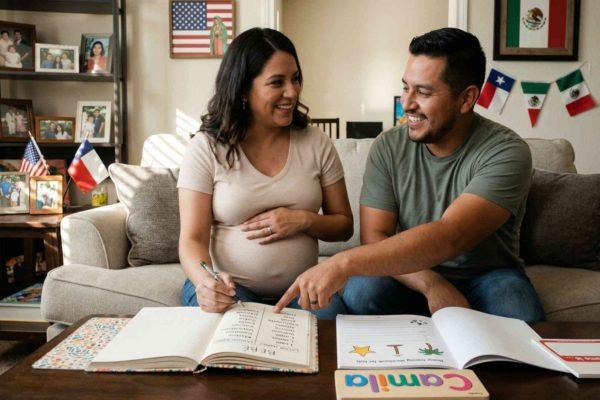
In the United States, the choice of a child's name has become a powerful statement of bicultural identity for Latino families. Names like Mateo, Camila, and Santiago now top national popularity lists, no longer confined to Hispanic households but embraced by parents from diverse backgrounds. This shift signals that Latino influence is no longer a niche—it's woven into the fabric of American culture.
For many Latino parents, naming a child is a deliberate act of bilingual strategy. They seek names that flow naturally in both Spanish and English, avoiding mispronunciations and easing social integration in schools and workplaces. This approach allows children to navigate between two worlds with confidence, preserving cultural roots while adapting to American reality. As one parent from Los Angeles put it, "We wanted a name that honors our Mexican heritage but won't get butchered in a job interview."
Hybridism and Functionality: The New Identity Code
The preference for functional, hybrid names reflects a broader evolution in how Latinos present themselves. Traditional names like José or María are giving way to options that resonate with a bicultural identity—names that are both familiar and modern. This trend isn't about abandoning heritage; it's about adapting it. A child's name today says more about their future than their migratory past, serving as a bridge between generations and geographies.
Pop culture plays a significant role in this transformation. Visibility of Latino artists and athletes—from reggaeton stars to soccer icons—inspires families of all backgrounds to adopt names like Santiago or Valentina. This cultural permeability turns these names into symbols of modernity and shared identity. For instance, the recent proposal to name streets after soccer legends like Pelé in New York City underscores how Latino icons are shaping public spaces and personal choices alike. NYC Proposes Temporary Street Names for Soccer Icons Pelé and Thierry Henry highlights this cultural crossover.
Yet, this transition isn't without tension. Within many Latino households, grandparents advocate for maintaining family traditions, while parents seek names that protect their child's bicultural identity from potential bias. This creative tension enriches the spectrum of identities in the country, as demographic reports show. It's a negotiation between roots and modernity, where every choice—whether Liam or Santiago—represents a step toward a more integrated society.
The impact extends beyond naming. Latino athletes like Miguel Rojas, honored by teammate Shohei Ohtani after his father's passing, embody the bicultural experience of balancing heritage with professional life in the US. Shohei Ohtani Honors Teammate Miguel Rojas with Touching Tribute After Father's Passing illustrates how these narratives resonate within the community.
Similarly, stories of Latinos confronting stigma—like those reclaiming their narratives around HIV—show how identity is constantly being redefined. Three Latinos Confront HIV Stigma and Reclaim Their Narratives offers a powerful example of resilience and self-expression.
Ultimately, the rise of Latino names in the US is more than a trend—it's a reflection of a community that refuses to be boxed into a single identity. Whether through a name, a career, or a cultural contribution, Latinos are shaping a new American story, one that celebrates diversity without rigid labels. As the data shows, the name on a birth certificate is no longer a marker of ethnic origin but a testament to a bicultural identity that is both rooted and forward-looking.