When Gustavo Dudamel takes the podium at the New York Philharmonic this fall, he's not just starting a new job—he's redefining what a symphony orchestra can be. The Venezuelan maestro, known for his electrifying energy and deep commitment to music education, will open his tenure with a splash that bridges the classical canon and contemporary pop, a move that feels both bold and inevitable for an artist who has always refused to stay in one lane.
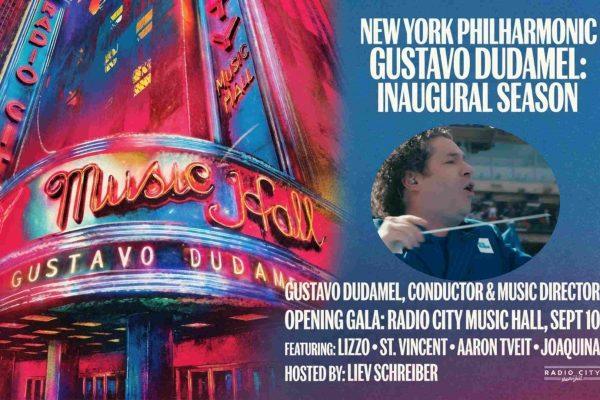
The season's centerpiece is a gala concert on September 10 at Radio City Music Hall, where Dudamel will share the stage with pop icons Lizzo and St. Vincent. The event, hosted by actor Liev Schreiber, promises to be a meeting of worlds: orchestral grandeur meets chart-topping soul and indie rock. For a bicultural Latino audience, this fusion is a familiar rhythm—the way our communities naturally blend traditions, from boleros to hip-hop, from cumbia to electronic beats. Dudamel, who grew up in Barquisimeto and rose through Venezuela's El Sistema, understands this cultural fluidity better than most.
This isn't just a one-off spectacle. The gala sets the tone for a season that Dudamel has curated with an eye toward accessibility and innovation. On September 30, a more formal but equally forward-looking gala will take place at the Wu Tsai Theater in David Geffen Hall, where the maestro will unveil his artistic vision for the orchestra's future. Tickets for both events are already on sale, and demand has been fierce—a testament to the excitement surrounding his arrival.
From Los Angeles to New York: A Homecoming of Sorts
Dudamel's move to New York comes after a celebrated decade-long tenure with the Los Angeles Philharmonic, where he became a cultural force in the city. His farewell concerts on the West Coast were emotional affairs, drawing crowds that reflected the diverse communities he had championed. As he settles into his new role, he carries with him a legacy of breaking down barriers—something he's already demonstrated in his LA Phil farewell, which was as much about Latino pride as it was about music.
The New York Philharmonic, one of the oldest and most storied orchestras in the United States, has been seeking a leader who can connect with younger and more diverse audiences. Dudamel fits that bill perfectly. His programming for the upcoming season includes works by Latin American composers alongside European classics, and he has made a point of commissioning new pieces from underrepresented voices.
A Historic European Tour
But Dudamel's ambitions extend far beyond New York. In a move that underscores his global appeal, the Philharmonic will embark on a major European tour, its first in a decade, with stops in Paris, Madrid, Berlin, and Vienna. This tour is a milestone for the orchestra, which has been criticized in recent years for its limited international presence. Dudamel's leadership is expected to restore the ensemble's reputation as a world-class institution that travels the globe.
For Latino audiences, this tour is a point of pride. Dudamel, who has become a symbol of Latin American excellence on the world stage, will be representing not just his home country but an entire region's artistic vitality. His journey from a young conductor in Caracas to the helm of one of the world's great orchestras is a story that resonates deeply with immigrants and their children, who see in him a reflection of their own aspirations.
The European tour will also feature collaborations with local artists, further blurring the lines between classical and popular music. In Madrid, for instance, there are rumors of a special guest appearance by a Spanish pop star, though the Philharmonic has yet to confirm. Such moves are typical of Dudamel, who has always seen music as a universal language that transcends genre and geography.
As the season unfolds, Dudamel will continue to push boundaries, both on and off the stage. He has already announced plans for community concerts in all five boroughs, as well as educational programs aimed at nurturing the next generation of musicians. His commitment to El Sistema-style social action is well documented, and he has brought that philosophy to New York, where he hopes to make classical music a tool for social change.
For those who have followed Dudamel's career, this new chapter feels like a natural progression. He has always been more than a conductor; he is a cultural ambassador, a bridge between worlds. As he takes the baton in New York, he carries with him the hopes of many—not just for great music, but for a more inclusive and vibrant cultural landscape.
In a city as diverse as New York, Dudamel's arrival is a moment of celebration. It's a reminder that classical music, often seen as elitist and distant, can be a space where all voices are heard. And for the Latino community, it's a powerful affirmation that our stories and our sounds belong on the grandest stages.