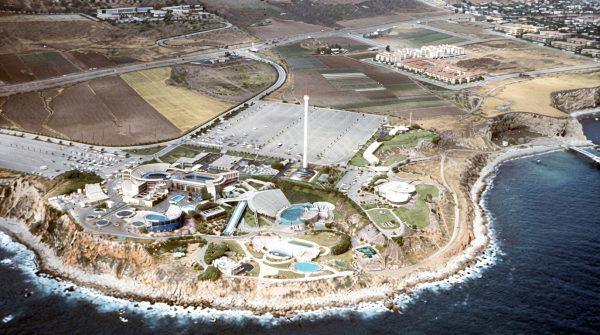
For generations of Southern Californians, Marineland of the Pacific was more than an aquarium—it was a doorway to the deep. Opened in 1954 on the rugged cliffs of the Palos Verdes peninsula, it grew into the largest oceanarium on the planet, a place where families from Los Angeles and beyond came to marvel at orcas, dolphins, and sea lions. Its sudden closure in 1987, after a series of ownership changes and the quiet overnight transfer of its beloved orcas to San Diego, left a void that would take decades to fill.
A Resort Rises from the Ruins
Today, the site is home to the Terranea Resort, a sprawling 102-acre oceanfront property that opened in 2009. The Mediterranean-style architecture—red-tile roofs and whitewashed walls—descends toward the same cliffs that once framed Marineland's shows. Developers preserved many of the original landscaping elements, including trees and plants that were part of the park's grounds, to keep a thread of continuity with the past.
Visitors now enjoy golf courses, gourmet dining, and a spa, all with panoramic views of the Pacific. But the resort is more than a luxury escape. It has set aside 75% of its land for native flora, some of which shares origins with the Channel Islands, and it actively works to maintain the ecological balance of the coastline. Tide pools, coastal trails, and kelp forests—where leopard sharks glide—are all accessible to guests and day-trippers alike.
The transformation has not erased the past. Instead, it has layered a new chapter onto a site that holds deep cultural memories. For many locals, Marineland was a backdrop for childhood field trips, first dates, and family outings. It also served as a filming location for TV shows and movies, and hosted celebrities and even underwater weddings, adding to its lore.
Local administrators acknowledge the challenge of balancing tourism with conservation. The heavy daily influx of visitors requires constant vigilance to protect the fragile coastal ecosystem. But the resort's commitment to preserving native plants and its educational programs about marine life suggest a genuine effort to honor the site's natural heritage.
For those who remember Marineland in its heyday, the resort may feel like a different world. Yet the whispers of the past are still there—in the shape of the land, the salt air, and the stories that old-timers tell. As one local historian put it, "The tide rolls on, but the memory of those whales and the joy they brought never really fades."
This reinvention is part of a broader trend along the California coast, where historic sites are being reimagined for new generations. El Niño forecasts may bring wetter winters, but the cliffs of Palos Verdes remain a constant, offering a connection to both nature and nostalgia.
For Latino visitors, the site holds a special resonance. Many in the community have roots in coastal regions of México and Central America, where the ocean is central to identity. The preservation of native plants and the celebration of marine life echo traditions of stewardship found across Latin American cultures. The resort's name itself, Terranea, hints at a connection to the land—a concept that resonates deeply in Latino heritage.
As the sun sets over the Pacific, the former Marineland site stands as a testament to reinvention. It is no longer the world's largest oceanarium, but it remains a place where people come to be awed by the sea. And in that, it carries forward the spirit of the original park.
For those planning a visit, the resort offers a chance to explore the same coastline that once drew crowds to see performing whales. Warm-water visitors like sea snakes and sharks have been appearing more frequently, a reminder of the ocean's dynamic nature. But the enduring appeal of this spot lies in its ability to blend past and present, heritage and hospitality.
In the end, the story of Marineland is not just about a park that closed. It's about how a community can honor its memories while embracing change. The Terranea Resort may be a luxury destination, but it also serves as a guardian of the coast, ensuring that the natural beauty that captivated millions remains for future generations.