FIFA has unveiled a historic $871 million prize pool for the 2026 World Cup, set to be co-hosted by the United States, Canada, and Mexico. This represents a 15% jump from the $727 million distributed in Qatar 2022, driven by the tournament's expansion from 32 to 48 teams and the logistical complexities of a three-nation hosting format.
For the first time, every qualified federation is guaranteed a baseline of $12.5 million, split into a $2.5 million preparation fund and a $10 million prize for securing a spot. This ensures that even smaller federations—like those from Central America or the Caribbean—can cover training camps, travel, and accommodations across the sprawling North American venues.
How the Prize Money Breaks Down
The performance-based rewards scale aggressively through the knockout rounds. The champion will pocket a record $50 million, while the runner-up earns $33 million, third place gets $29 million, and fourth place takes $27 million. Quarterfinalists receive $19 million, Round of 16 teams get $15 million, and those eliminated in the Round of 32 earn $11 million. Even teams that exit in the group stage (positions 33 to 48) will take home $9 million each.
This structure reflects FIFA's push to reward competitive excellence while maintaining financial stability for all participants. The $12.5 million guarantee alone is a $1 million increase per team compared to 2022, and a separate $16 million pool covers specialized delegation subsidies, medical support, and improved ticketing for smaller federations.
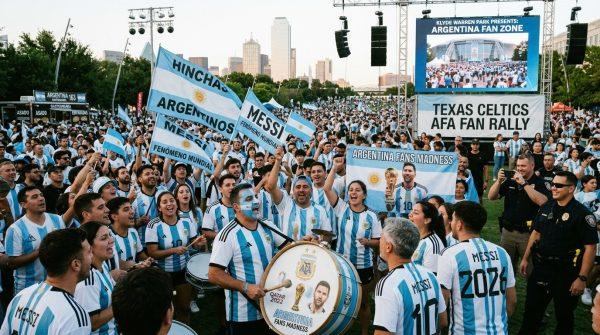
For Latino fans, this World Cup carries extra weight. Mexico returns as a host for the third time—after 1970 and 1986—and several Latin American teams, including Argentina, Brazil, Uruguay, and Colombia, are expected to contend. The expanded format also gives more nations from the region a shot at the global stage, from Costa Rica to Ecuador.
The financial stakes are especially high for Latin American federations, where World Cup revenue often funds grassroots programs and infrastructure. Argentina, the reigning champion, could see a significant boost if they repeat, while Mexico and the U.S. will benefit from hosting duties. The prize money also fuels player bonuses and federation budgets, making every match a high-stakes affair.
Beyond the cash, the champion receives a solid gold trophy replica and comprehensive medical insurance for its squad. The global platform also opens doors for players to secure individual endorsements, a factor that resonates with stars like Lionel Messi or rising talents from the region. As Shakira's record-breaking Spotify numbers show, the World Cup's cultural reach extends far beyond the pitch.
With the tournament still two years away, the financial framework sets a new benchmark for international soccer. For Latino communities across the Americas and the diaspora, the 2026 World Cup promises not just thrilling matches but also a chance to see their nations compete on the biggest stage—backed by unprecedented investment.