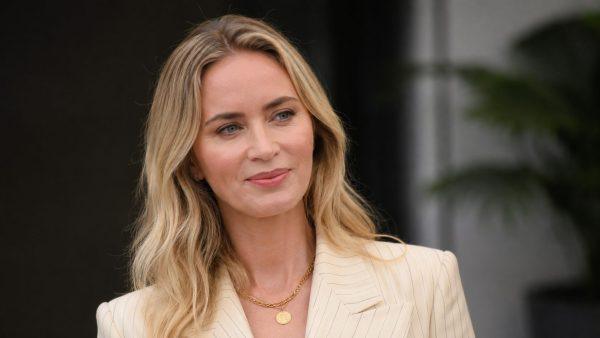
Before she faced off against atomic secrets in Oppenheimer or silenced a world in A Quiet Place, Emily Blunt had a very different vision for her life. It didn't involve red carpets or blockbuster premieres. Instead, she imagined herself in a conference room in New York or Geneva, interpreting delicate diplomatic conversations between Spanish-speaking nations and the United Nations.
In a recent interview with BBC Radio 2, Blunt revealed that acting was never part of her original plan. “Before I was going to be an actress, I wanted to work for the UN and be a Spanish translator,” she said. Her mother, a gifted linguist, inspired this ambition. Blunt planned to study Spanish, immerse herself in South America, and build a career bridging languages at the highest levels of international diplomacy.
A Stutter That Opened a Door
Blunt has spoken openly about struggling with a severe stutter as a child. It was a drama teacher who encouraged her to perform in school plays as a way to build confidence. That suggestion, meant to help a shy girl find her voice, led to an unexpected discovery. During a performance at the Edinburgh Fringe Festival, a talent agent approached her and asked if she had ever considered acting professionally. Her answer was honest: “I hadn’t really thought about it as a career.”
That single conversation rerouted her life. Instead of interpreting for diplomats, she would go on to star in over 45 films, earning multiple award nominations and an estimated fortune of around $80 million. But her passion for languages never faded—it simply found a new stage.
Languages on Screen
Ironically, Blunt has become known for mastering languages for her roles. She has learned Russian, Korean, and Mandarin dialogue for different films. For Steven Spielberg's Disclosure Day, she even helped create an entirely fictional alien language made of clicks, tones, and vocal sounds. Her linguistic talent, once aimed at the UN, now serves the silver screen.
This story resonates deeply in a world where translation is being rapidly transformed by artificial intelligence. A recent Microsoft study found that translation and interpretation rank among the occupations with the highest overlap with AI tools. Systems like ChatGPT and Copilot can already handle many tasks traditionally done by human translators. While experienced interpreters remain essential in diplomacy, courts, and high-level negotiations, the profession is evolving fast.
Blunt's journey from a potential UN career to Hollywood stardom is a reminder of how life can pivot in unexpected ways. For bicultural Latinos who often navigate multiple languages and identities, her story might feel familiar. It echoes the choices many face between practical paths and creative passions. And it underscores the value of language as a bridge—whether in diplomacy or in art.
For more on how language and identity intersect in the Latino world, check out our piece on Shakira opening up about love and career. And if you're curious about other stars who took unexpected turns, read about Oliver Tree's unconventional approach to wealth.