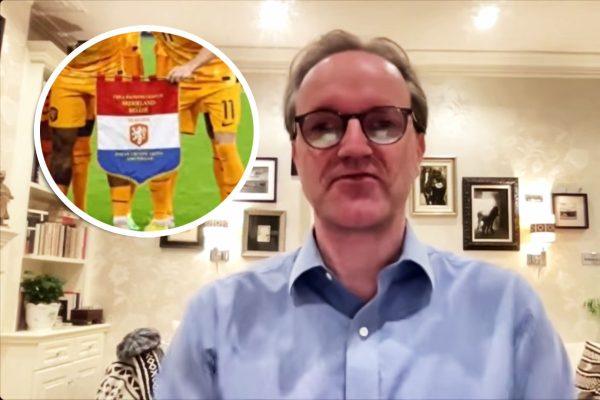
With the 2026 FIFA World Cup just weeks away, economist Joachim Klement has released his data-driven forecast for the tournament co-hosted by the United States, Mexico, and Canada. Klement is no ordinary sports pundit—his mathematical algorithm has correctly predicted the last three World Cup champions before a single match was played. After calling Germany's 2014 victory, France's 2018 title, and Argentina's 2022 run, his model now points to a first-time winner: the Netherlands.
How the Algorithm Works
Klement's formula combines team performance metrics, historical data, and probabilistic modeling to simulate tournament outcomes. He acknowledges that while elite teams like France have higher baseline probabilities due to individual talent, luck accounts for roughly 50% of any single match result. "If the Dutch squad reaches the semifinals, their confidence levels will balance any high-pressure scenario against top-tier opponents," Klement explained.
The simulation predicts the Netherlands will face France in the quarterfinals, securing a narrow victory. In the semifinals, they would defeat tournament favorites Spain, setting up a final against Portugal on July 19 at MetLife Stadium in New York. That match would mark the end of Cristiano Ronaldo's international career—a bittersweet conclusion for the legendary forward, according to the model.
A Historic Curse in Sight
The Netherlands carries a heavy legacy as the most successful football nation never to win a World Cup. They lost finals in 1974 to West Germany, 1978 to Argentina, and 2010 to Spain. Current betting markets list Virgil van Dijk's squad as the eighth favorite, but Klement's algorithm sees a different outcome. If his formula holds, this generation of Dutch players will finally break that curse.
The tournament also features significant changes for host venues. As part of the preparations, FIFA stripped 11 NFL stadiums of corporate names for the 2026 World Cup, with Atlanta receiving an exception. Meanwhile, New York City has proposed temporary street names honoring soccer icons Pelé and Thierry Henry during the tournament.
Klement's track record gives his prediction weight, but he remains cautious. "I was surprised by my own algorithm's result," he admitted, given the demanding schedule the Dutch team would face. Still, for a nation that has come so close so many times, the 2026 World Cup could finally deliver the ultimate prize.