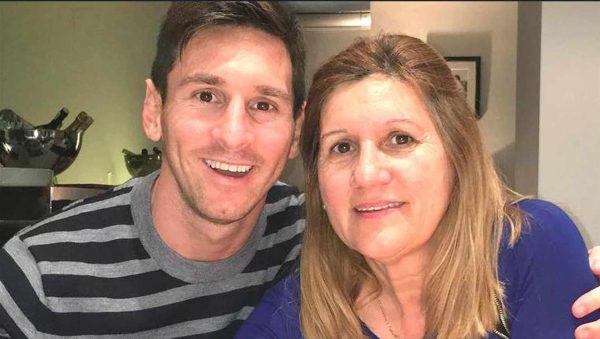
Before Lionel Messi lifted World Cups and Ballon d'Ors, Celia María Cuccittini was just a mother in Rosario, Argentina, working to keep her family afloat. She cleaned houses, worked in a factory, and raised four children alongside her husband, Jorge. Their life was ordinary in every way except one: their third son had an extraordinary gift with a soccer ball.
Celia has never sought the spotlight. While Jorge became Messi's representative and public figure, Celia remained in the background, a steady presence in the family's story. Yet her role in Messi's life is undeniable—from those early days in Rosario to the emotional embrace after Argentina's 2022 World Cup win.
A mother's sacrifice in Rosario
Born in Rosario in 1960, Celia married Jorge and together they built a family that would eventually include Rodrigo, Matías, Lionel, and María Sol. Before the Messi name became synonymous with football, Celia worked outside the home to help make ends meet. Argentine media have reported she did part-time cleaning and worked at a factory that made or repaired magnetic components, while Jorge supervised at a factory.
It was Celia who often drove her sons to practice, and it was her mother—also named Celia—who encouraged young Lionel's passion for the game. That grandmother, who died before Messi's rise, is the one he honors with his sky-pointing goal celebration. But the face tattooed on his back is his mother's.
Separation and sacrifice
When Messi was 13, Barcelona came calling, offering to pay for the growth hormone treatment he needed. The family moved to Spain together, but Celia eventually returned to Rosario with the other children, leaving Jorge and Lionel in Barcelona. For a shy teenager, the separation was painful. He missed his mother and siblings, even as he began his path to stardom.
That period shaped Messi's character. He learned to be independent, but the bond with his mother never weakened. Years later, when Argentina won the World Cup in Qatar, Celia ran onto the field and embraced her son. It was a moment that spoke louder than any interview.
Facing a new loss
On August 8, 2026, Jorge Messi died at 68 in Rosario after a long illness. He had been treated at a clinic and spent time at home with Celia and their children. During the 2026 World Cup, Messi became emotional in Argentina's opening match against Algeria, later revealing he was dealing with a difficult personal situation. The family confirmed Jorge was undergoing treatment, but his exact diagnosis was never made public.
For Celia, this is the loss of the man with whom she built a family long before the world knew Lionel Messi. She now stands as the surviving parent of a player whose story remains deeply tied to home. For the rest of the world, he is Lionel Messi. For Celia, he is simply her son.
As the family mourns, fans around the world have expressed their support. Jorge Messi's death has brought an outpouring of tributes, and many have noted how Celia has remained a quiet pillar of strength. Her story is a reminder that behind every great athlete, there is often a mother whose sacrifices are rarely seen but always felt.