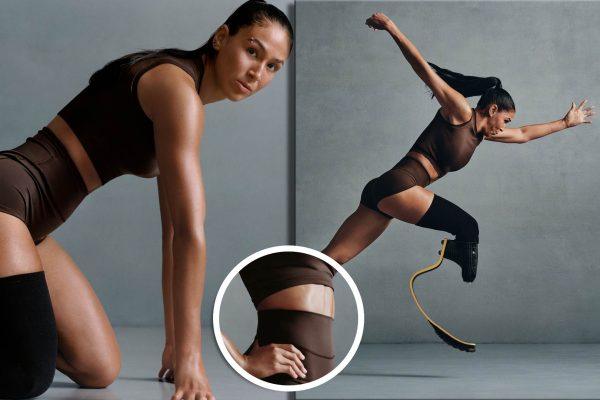
Beatriz Hatz has never let a starting line define her limits. Born in Littleton, Colorado, with fibular hemimelia—a condition that meant her right leg was missing the fibula bone—she had a below-the-knee amputation when she was just months old. But from the moment she joined her high school varsity track team, she made it clear that her story would be about speed, not setbacks. She won nearly every sprint and jump event she entered, astonishing coaches and rivals alike.
A Meteoric Rise in the T64 Division
Hatz’s talent quickly caught the eye of the U.S. Paralympic Committee. Her international breakthrough came at the 2017 World Para Athletics Junior Championships, where she claimed gold in the 100m and 200m, plus a silver in long jump. That dominance earned her the 2018 U.S. Paralympics Track & Field Female Athlete of the Year award. Today, she ranks among the top three in the world in all three of her preferred events in the T64 category.
She made her Paralympic debut at the Tokyo 2020 Games, reaching the finals in the sprints. Then came the Parapan American Games in Santiago, where she took gold. But it was in Paris 2024 that Hatz reached the pinnacle of her career, capturing bronze in the T64 long jump. That medal cemented her status as one of the most consistent and respected athletes on Team USA.
From the Track to the Screen
Now Hatz is taking her message of inclusion to a massive new audience. In a move that surprised both sports and entertainment media, she has been confirmed as the first contestant with a physical impairment to join the cast of Love Island USA for its eighth season. The reality show, known for its sun-drenched drama and romantic pairings, will now feature a Paralympic medalist who intends to use the platform to challenge stereotypes about the limb-different community.
“I want to show that sport and personal drive give you total freedom to excel in any area of life,” Hatz has said. Her appearance on the show is a golden opportunity to raise awareness among mass audiences, proving that adaptive athletes belong not just on the podium but in every corner of popular culture.
This isn’t just a personal milestone—it’s a cultural shift. For Latino audiences across the Americas, Hatz’s journey resonates deeply. Her story echoes the resilience seen in communities from Bogotá to Buenos Aires, where athletes often overcome systemic barriers to shine. While Hatz represents the U.S., her message of breaking molds is universal. It’s a reminder that the fight for representation extends beyond the track and into the living rooms of millions.
As she prepares for her television debut, Hatz continues to train for upcoming competitions, including the 2026 World Cup cycle’s international friendlies, where she hopes to inspire a new generation of athletes. Her journey from a Littleton high school track to the Paralympic podium and now to national television is proof that the biggest barriers are the ones we refuse to accept.