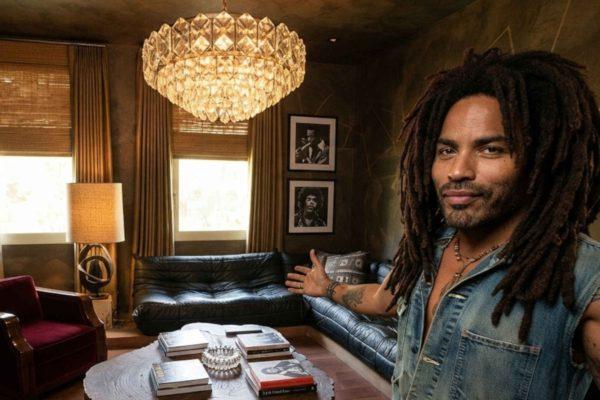
Lenny Kravitz has always been a man of many layers—musician, designer, actor, and now, a storyteller through architecture. In a rare glimpse into his Parisian mansion, the rock star reveals a space that goes beyond luxury: a private room dedicated entirely to the woman he calls the love of his life, his mother, Roxie Roker.
The mansion, known as Hôtel de Roxie, sits in the heart of Paris, a 1920s building originally owned by Countess Anne d'Ornano. Kravitz spent years transforming it into a reflection of what he calls 'soulful elegance,' blending custom instruments, unique art, and family heirlooms. But the emotional core is the petit salon, or the 'Roxie Room,' where every detail pays homage to the actress who broke barriers on The Jeffersons.
A Sanctuary of Memory and Design
Inside the Roxie Room, Kravitz has arranged photographs taken by his father in the 1960s, capturing moments from his childhood and the deep bond they shared. The room is intimate, filled with personal objects that tell a story of love and loss. 'My mother was my greatest inspiration,' Kravitz has said, and this space is a testament to that. The entire mansion bears her name, fulfilling a dream she had of retiring in Paris.
But Kravitz's tribute doesn't stop there. Across the Atlantic, on a thousand-acre coffee plantation in Brazil, he keeps her presence alive. The farm, a stark contrast to the Parisian elegance, is where he reconnects with his roots—a nod to his Bahian heritage through his father. Photographs of Roker are placed carefully throughout the rustic property, ensuring she remains a constant companion.
This duality—between the refined Parisian salon and the wild Brazilian landscape—mirrors Kravitz's own identity. He is a New Yorker with Caribbean and Jewish roots, a global citizen who finds home in both a speakeasy nightclub hidden in his basement and the simplicity of a farm. His approach to life, much like his fitness regimen, is about balance and intention.
The Roxie Room is more than a memorial; it's a living archive. Portraits of his grandparents and personal items act as silent guardians, reminding visitors that design can be a bridge to memory. For Kravitz, these properties are not just homes—they are testaments to his journey, where every corner holds a story of those who shaped him.
In a world where celebrity homes often feel like showrooms, Kravitz's mansion stands out for its authenticity. It's a space where the past and present coexist, where a mother's love is etched into the walls. As he continues to tour and create, the Roxie Room remains a sanctuary, a place where the artist can pause and remember where he came from.
For those who follow his career, this glimpse into his private world is a reminder that family is the foundation of everything. Whether in Paris or Brazil, Lenny Kravitz carries his mother's legacy with him, proving that the greatest love stories are the ones we build into our homes.