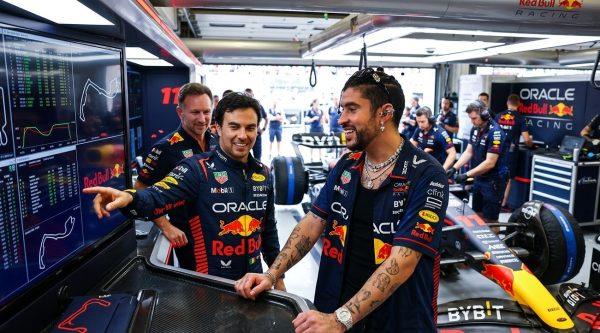
When Bad Bunny stepped into the Red Bull Racing garage at the Monaco Grand Prix, it wasn't just a celebrity pit stop—it became a moment that the team still talks about. The Austrian energy drink squad recently shared a throwback to that 2023 visit, and the internet responded with the kind of enthusiasm that only Benito Martínez can generate.
The Puerto Rican artist didn't just pose for photos. According to team insiders, he approached the stationary car with a mechanic's curiosity, carefully examining the narrow cockpit—a space usually reserved for drivers like Max Verstappen and Sergio Pérez. The mechanics were reportedly impressed by how naturally he handled the vehicle, as if he'd been around F1 cars his whole life.
A Bond Built on Speed and Culture
Bad Bunny's relationship with elite motorsports didn't start in Monaco. It was already woven into his 2023 album, where the music video for one of his tracks featured none other than Guadalajara's own Sergio "Checo" Pérez. That visual collaboration wasn't just a cameo; it was a statement about how Latino identity is reshaping global sports culture.
The singer has long expressed a passion for high-performance cars, and his connection to Red Bull Racing feels natural. In a sport historically dominated by European audiences, the presence of a figure like Bad Bunny signals a shift. Latinos in the United States are increasingly tuning into Formula 1, and the singer's involvement accelerates that trend. As we've noted in our coverage of Bad Bunny's Inner Circle: The Athletes Who Call Him a Friend, his friendships with athletes like Pérez go beyond publicity—they're rooted in genuine mutual respect.
The Monaco moment also highlights how sports brands are tapping into Latino cultural capital. Red Bull Racing didn't just gain a viral post; they earned credibility with a demographic that values authenticity. The team's decision to revisit the visit shows they understand that these crossovers have lasting value.
More Than a Photo Op
What made the Monaco visit stand out was the singer's genuine engagement. He didn't just wave at cameras; he studied the car, asked questions, and interacted with the crew. The team later shared a video on Instagram showing him climbing into the cockpit, and fans couldn't get enough. The post racked up millions of views, proving that the intersection of Latin music and motorsports is a powerful draw.
This isn't an isolated incident. Bad Bunny's influence extends beyond music into fashion, film, and even toys—he's reportedly set to voice a character in Toy Story 5, a move that stemmed from his well-known toy obsession. But his impact on Formula 1 is particularly noteworthy because it challenges the sport's old guard. The Latino community, especially in the U.S., is embracing F1 at a rapid pace, and stars like Bad Bunny make it feel accessible.
For Red Bull Racing, the payoff is clear: younger, more diverse fans. The team's social media engagement spikes whenever they post about the singer, and the Monaco memory remains a fan favorite. It's a reminder that in today's globalized world, a Puerto Rican reggaetonero can move through the same spaces as Austrian engineers and Mexican drivers, and that's not just cool—it's transformative.
As Bad Bunny continues to break barriers—whether in music, sports, or even meeting the Pope in Madrid—his Monaco moment with Red Bull Racing stands as a testament to his ability to make any arena feel like his own. The car never started its engines that day, but the cultural engine it ignited is still running.