Across the Lone Star State, a handful of towns that once bustled with commerce and community now sit quiet, their streets empty and their buildings frozen in time. These ghost towns are more than relics—they are chapters of Texas history, shaped by booms and busts that defined the region. For travelers and history buffs alike, they offer a tangible connection to the past, just a short drive from cities like Houston.
The rise and fall of these settlements often followed a familiar pattern: a natural resource—be it coal, water, or fertile land—sparked growth, and then a shift in transportation, a natural disaster, or an economic downturn pulled the rug out. The Texas State Historical Association has documented how these forces turned thriving hubs into abandoned sites, each with its own story of resilience and loss.
From boom to bust: the forces that emptied these towns
In the 19th and early 20th centuries, mining, farming, and cattle ranching drove the expansion of towns across Texas. Communities built banks, general stores, hotels, and schools, serving thousands of families. But when highways rerouted, mineral prices dropped, or droughts struck, residents packed up and moved on. The following five destinations illustrate this cycle of growth and decline.
The Grove: a casualty of new roads
Founded around 1859 in Coryell County, about 15 miles southeast of Gatesville, The Grove was a bustling commercial center with 150 residents. Its decline began in the 1940s when new highway construction bypassed the town, and the expansion of Fort Hood and the Belton Dam drew people away. Today, it stands as a classic example of a community left behind, about three hours from Houston.
Thurber: Texas's largest company town
Thurber, located near the Palo Pinto County line in Erath County, was the largest company town in Texas, operating from 1888 to 1921. At its peak, it housed over 10,000 residents and was a major producer of bituminous coal. The mines closed in 1903, and the town faded into history. It's now a ghost town about five hours from Houston.
Terlingua: from mining to glamping
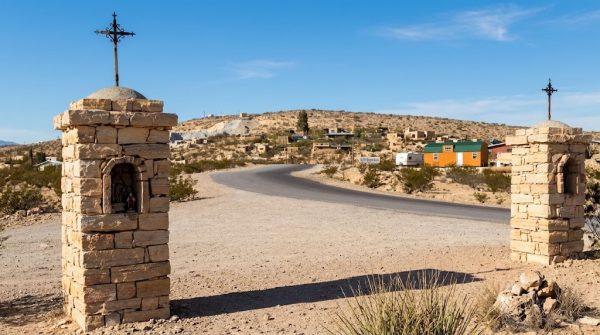
Terlingua, near Big Bend National Park in West Texas, was the headquarters of the Chisos Mining Company in the early 20th century. After World War II, flooded mine shafts and falling mineral prices turned it into a ghost town. In recent years, it has seen a revival as a destination for glamping and stargazing, drawing visitors who want to experience the desert's stark beauty.
Independence: where Baylor was born
Established in 1835 in Washington County, Independence was home to Baylor University's original campus and Sam Houston's family residence. When railroads bypassed the town in the 1880s, the university moved to Waco, and the town dwindled. The Old Independence Cemetery still holds the graves of notable figures, making it a pilgrimage site for history enthusiasts.
Lobo: a German-owned ghost town
Lobo, located about 100 kilometers northwest of Marfa, was abandoned in the 1990s. A group of German friends purchased the entire town for private retreats and music festivals, preserving its motel, grocery store, post office, gas station, restaurant, swimming pool, and a working water well. It's a unique example of a ghost town given a second life.
The final five: remnants of a changing state
The remaining five towns on our list each tell a different story of decline, from natural disasters to economic collapse.
Guerra: Texas's smallest town
Guerra, in Jim Hogg County near the Mexican border, holds the official title of the smallest town in Texas, with a population of just three residents. It's a stark reminder of how rural communities can fade to near oblivion.
Indianola: a port destroyed by hurricanes
Indianola, on the Gulf Coast, was a booming seaport that generated millions in revenue through shipping, banking, and hotels. But consecutive hurricanes in the late 1800s destroyed the town, and it was never rebuilt. Today, only a few ruins and a cemetery mark its former glory.
Barstow: a farming dream that dried up
Barstow, founded in 1892 by irrigation engineer George E. Barstow, grew to over 1,000 residents by 1900. But in 1918, dam failures on the Pecos River and severe droughts ended local farming, and the town collapsed. It now sits as a desolate reminder of the fragility of agricultural communities.
Winkelmann: a collection of historic buildings
Winkelmann, developed by Ray Winkelmann east of Brenham, was a unique project that relocated 150 historic buildings to create a living museum of saloons, plantation homes, schools, and general stores. Financial troubles led to foreclosure in the mid-1980s, and public auctions closed the site by 1994.
Toyah: a railroad town that faded
Toyah, established in 1880 in Reeves County, began as a tent city serving livestock rail shipments. It grew to 800 residents by 1910 and over 1,000 by 1914, but the Great Depression cut its population to just 100 by 2000. It's a testament to the boom-and-bust cycles of railroad towns.
These ghost towns are not just abandoned places—they are living history. For those willing to explore, they offer a glimpse into the challenges and triumphs of early Texas. And as Latino voters reshape the state's political landscape, these sites remind us of the diverse roots that built Texas. Whether you're a history buff or a curious traveler, a visit to these forgotten places is a journey through time.