When the 2026 FIFA World Cup kicks off this week, it won't just be the 48 national teams competing for glory. Behind the scenes, a sprawling security machine—unmatched in scale for any sporting event—will be working to keep fans safe across 11 US host cities. From artificial intelligence surveillance to drone-catching quadcopters, the United States government is treating this tournament like a series of 78 Super Bowls packed into 39 days, as Andrew Giuliani, executive director of the White House World Cup working group, put it.
A Multi-Billion Dollar Shield for 7 Million Visitors
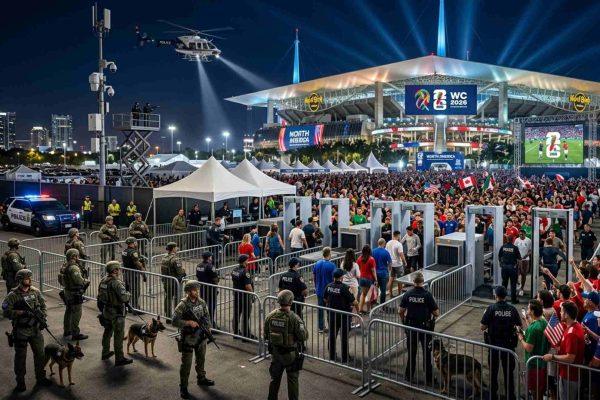
The Department of Homeland Security has elevated the World Cup to a high-level federal protection tier, similar to the Super Bowl, but stretched across a continent. The Federal Emergency Management Agency (FEMA) has allocated $625 million to local law enforcement in host cities like Los Angeles, New York, Dallas, and Kansas City. But the real focus is on the skies: an additional $250 million is dedicated to countering rogue drones, a threat that New York Police Commissioner Jessica Tisch says “keeps her up at night.”
To neutralize unauthorized drones over stadiums and FIFA Fan Zones, the FBI will deploy specialized Fortem quadcopters equipped with nets that can capture and safely ground intruding objects mid-air. This technology, honed in recent global conflicts, reflects a shift in security priorities as drones become more accessible and dangerous.
FBI Prepares for Worst-Case Scenarios
The FBI spent two years crafting localized safety blueprints for each host city, drawing on crowd control data from events like New York’s Times Square New Year’s Eve celebration. Amit Kachhia Patel, the FBI special agent in charge of the New York sector, says federal teams are training “for the absolute worst case scenario.” On match days, Joint Operations Centers will unite municipal, state, and federal intelligence units, while robotic detection dogs, mobile X-ray trucks, and thousands of AI-powered cameras scan crowds. Digital teams will also counter AI-generated deepfake disinformation aimed at causing panic.
In cities like Houston, where NRG Park is under full lockdown, the security grid is already in place. Meanwhile, SoFi Stadium in Los Angeles has detailed its own fan zone and transport plans, integrating with the broader federal strategy.
Local Upgrades and Dignitary Protection
The tournament is also driving major tech upgrades in municipal police departments. Dallas, for example, spent $120 million on body cameras with real-time translation tools to help officers communicate with international tourists. The Secret Service, despite an internal deficit of about 860 field agents, will lead protection for visiting heads of state. Cities like Kansas City have hired data firms like Peregrine Technologies to analyze public records and cultural gathering points, ensuring a seamless security web.
For Latino fans traveling from across the Americas—from Buenos Aires to México City—this invisible infrastructure will be a quiet reassurance. The World Cup is more than a game; it's a gathering of millions, and the US is betting big on technology and coordination to keep it safe.