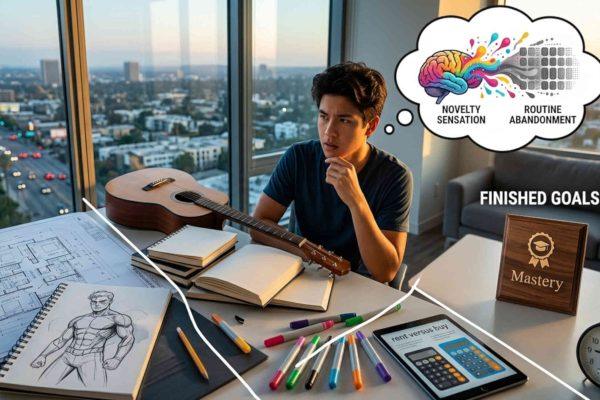
You’ve probably felt it: the rush of starting a new project—learning guitar, launching a side hustle, or training for a marathon—only to lose steam weeks later. For many Latinos navigating multiple passions and responsibilities, this cycle can feel like a personal failure. But specialists say it’s not laziness. It’s a psychological pattern where the brain becomes addicted to novelty, releasing dopamine for new stimuli but losing interest once routine sets in.
The Emotional Roots of Starting Over
This pattern, sometimes called the “know-it-all” pattern, has an emotional foundation. It often stems from perfectionism, impulsivity, or a fear of failure. While having diverse interests signals creativity, systematic abandonment can be a strategy to avoid discomfort—like boredom or frustration. Recognizing this can reduce guilt and open the door to practical solutions.
Four Causes of Systematic Abandonment
- Loss of novelty: Once the initial dopamine surge fades, the project loses its appeal, and the next big thing takes its place.
- Impulsivity and poor planning: Without a roadmap, unexpected costs or logistical challenges overwhelm the ability to respond.
- Discouragement during difficulties: When obstacles arise, withdrawal feels easier than persistence.
- Paralyzing perfectionism: The fear of submitting imperfect work leads to indefinite procrastination—any result less than perfect feels like failure.
These causes resonate across Latin America, where cultural expectations around success and family can amplify the pressure. In cities like Bogotá or Buenos Aires, entrepreneurs and artists often juggle multiple projects, but the same psychological traps apply.
Strategies to Break the Cycle
Psychotherapy is the most effective tool for addressing deep-seated patterns like perfectionism or anxiety. But less formal resources also work. Sharing ideas with friends before starting, or finding a “motivation partner” to supervise weekly progress, can help manage boredom and self-criticism. By exchanging perspectives, it becomes easier to push through the slump.
For those inspired by big goals—like the Anitta, Lisa, and Rema 2026 World Cup anthem or Messi’s race to 1,000 goals—the key is to treat each project as a marathon, not a sprint. Even Latin American superstitions remind us that persistence, not just passion, brings results.
Ultimately, finishing what you start isn’t about willpower alone. It’s about understanding the emotional triggers and building systems that support completion. Whether you’re in México City or the diaspora, the path to success is paved with small, consistent steps—not just new beginnings.