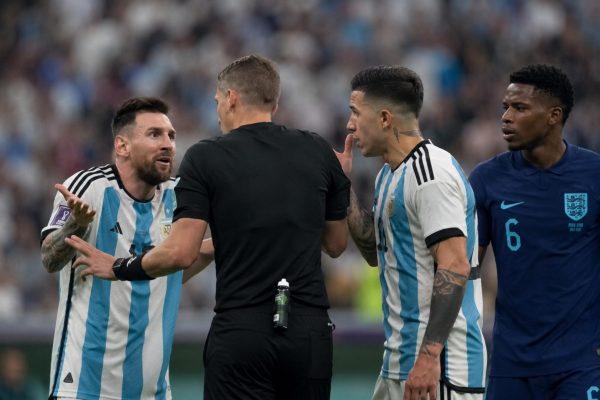
As the 2026 World Cup progresses through its knockout stages in North America, a quiet but significant geopolitical restriction continues to shape the tournament's officiating landscape. FIFA maintains a policy that bars English referees from taking charge of matches involving the Argentine national team, a measure rooted in the lingering sensitivities of the 1982 Falklands War between Argentina and the United Kingdom.
This administrative boundary, while rarely discussed publicly, has resurfaced as a practical concern for the tournament's final phases. With Argentina advancing to the quarterfinals after a hard-fought 3-2 comeback against Egypt, and England still in contention on the opposite side of the bracket, the possibility of both nations meeting in the semifinals or final has forced FIFA's Refereeing Committee to plan alternative officiating pools.
Michael Oliver's World Cup Run and the MetLife Barrier
Michael Oliver, widely regarded as one of the top referees in the active tournament pool, was assigned Thursday's high-profile quarterfinal between Spain and Belgium in Los Angeles. It marks his seventh World Cup match, more than any other English official in history. Yet his chances of officiating the July 19 final at MetLife Stadium in New Jersey remain slim, not because of performance, but because of a diplomatic restriction that predates his career.
Oliver and his fellow English referee Anthony Taylor are systematically excluded from any match involving Argentina. This means that if either Argentina or England reaches the final, both referees are automatically disqualified from selection. The policy, while not officially codified in FIFA's public rulebook, is understood as a preventative measure to avoid any perception of bias or political tension on the pitch.
Tournament Dynamics and Officiating Logistics
The current bracket adds urgency to these calculations. Argentina, after securing its quarterfinal spot, now faces Switzerland for a place in the semifinals. On the other side, England is set to take on Norway, led by Erling Haaland. Should both teams win their respective matches, they would meet in a semifinal on July 15, creating a direct collision course that would eliminate Oliver and Taylor from final consideration.
FIFA's executive branches are already working to identify neutral referees from other continental confederations to cover the late tournament dates. The goal is to ensure that the officiating crew for the final is perceived as impartial, free from any historical or political baggage that could distract from the game itself.
This is not the first time geopolitical factors have influenced World Cup officiating. Similar restrictions have been applied in other contexts, such as when referees from certain nations are barred from matches involving rival countries. However, the Argentina-England dynamic carries particular weight given the history of the Falklands conflict and the intense football rivalry between the two nations.
For Argentine fans, the policy may feel like an unnecessary reminder of a painful chapter, but it also reflects FIFA's broader commitment to maintaining institutional neutrality. As the tournament progresses, the focus will remain on the pitch, where Argentina's quest for a third World Cup title continues. For now, the refereeing question remains a logistical footnote, but one that could become central if the bracket aligns as many expect.