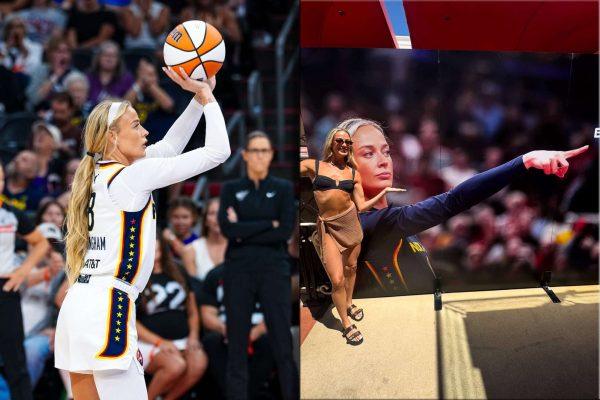
Before the Indiana Fever faced the Atlanta Dream at State Farm Arena, the pregame ritual took an unusual turn. As the national anthem played, the Dream roster remained in the locker room, while the Fever lined up on the court. Among them, Sophie Cunningham stood out—the only player on the floor with her right hand over her heart.
The image circulated quickly. Some fans praised Cunningham as a patriot and a role model, while others argued that standing quietly is enough and that the fuss was overblown. The moment became another flashpoint in a season already full of them for Cunningham, whose outspoken views on transgender athletes have made her one of the WNBA's most talked-about figures.
A gesture, a debate, and a security misstep
The anthem moment wasn't the only incident that night. During the game, security approached two fans and asked them to cover shirts that expressed support for Cunningham's positions. The WNBA and the Dream later issued statements saying the security team acted improperly and that the fans should not have been told to cover up.
For Cunningham, the attention is nothing new. She has been at the center of controversy before, including a shove from Angel Reese that sparked outrage after a slow-motion replay, and a flagrant foul by DiJonai Carrington that fueled league-wide debate. Her new contract compared to Carrington's also drew attention to the ongoing pay gap conversation.
But this time, the focus was on the anthem. Under Title 36 of the U.S. Code, the recommended etiquette is to face the flag with the right hand over the heart, though compliance varies across professional sports. Cunningham's gesture was a textbook example, yet it became a lightning rod.
Some commentators downplayed the significance, noting that many players choose not to place a hand over their heart, and that standing respectfully is a common alternative. Others saw Cunningham's action as a deliberate statement, especially given her recent public comments on transgender participation in women's sports.
The incident also drew attention to the broader cultural moment. For many Latino fans, the anthem debate is familiar—similar discussions have played out in soccer and boxing, where athletes' gestures during the anthem often become political symbols. In the U.S., the anthem has been a site of protest and patriotism for decades, from Colin Kaepernick's kneeling to the raised fists of Tommie Smith and John Carlos.
Cunningham's gesture, though, was not a protest. It was a traditional display of respect, which made the reaction all the more telling. In a league that has become increasingly vocal on social issues, her choice to stand apart—literally and figuratively—resonated with different audiences in different ways.
The Fever, for their part, have backed their coach Stephanie White amid the fallout from Cunningham's on-court incidents, as reported in this piece. And Cunningham's off-court persona has also been in the spotlight, including a bar-top Toby Keith moment that endeared her to Indianapolis fans.
As the WNBA season continues, Cunningham remains a polarizing figure. Her anthem gesture may have been a simple act, but in a league where every move is scrutinized, it became another chapter in her complicated relationship with the public. For now, the debate over what it means to honor the flag—and who gets to define that—shows no signs of cooling down.