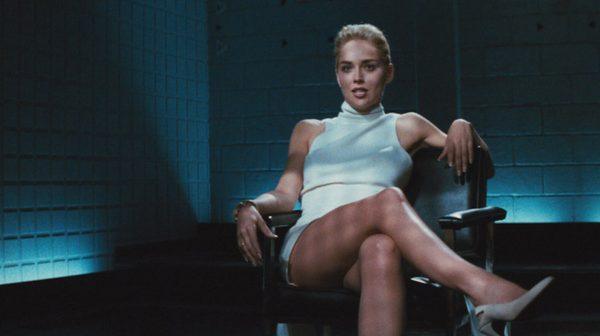
More than three decades after Basic Instinct turned Sharon Stone into a global icon, the actress is still reckoning with the role that redefined her life. In a recent appearance on Mayim Bialik's podcast Breakdown, Stone, 68, revealed that embodying Catherine Tramell pushed her into psychological territory she wasn't prepared to navigate at the time.
Stone explained that the experience didn't stay on set. It bled into her real life, altering the kind of people who began to orbit around her. "Dark people, dark things, dangerous things came into my life," she recalled. The performance, she said, made her a magnet for individuals who assumed the woman who could so convincingly play a femme fatale must share some of the character's traits.
The cost of a career-defining role
Released in 1992, Basic Instinct catapulted Stone to international stardom. Her portrayal of Catherine Tramell—a seductive, psychologically complex crime novelist—became one of cinema's most memorable femme fatales. But Stone says the role required her to explore parts of herself she had never touched before. At the time, she was young and inexperienced, and she hadn't yet learned how to separate her own identity from the darkness demanded by the character.
This isn't the first time Stone has spoken about the psychological toll. Earlier this year, she told Variety that she dug so deeply into the role that she began sleepwalking during production, sometimes waking up fully dressed in her car. But what happened after filming may have been even more unsettling.
Stone said people she describes as genuinely "dark" began identifying with her because of the performance. They assumed that the woman capable of portraying Catherine Tramell so convincingly must share some of the character's qualities. That assumption, she said, opened a door she never expected.
A warning learned the hard way
More than 30 years later, Stone has distilled that period into a vivid piece of advice: fascinating people are not necessarily people who should be allowed into your life. She compared the temptation to encountering the devil at a cocktail party—someone can be charismatic, mysterious, and interesting without deserving a place at your table. Her warning was essentially: "Don't give that person a seat."
For Stone, the larger lesson was learning to protect what she calls her "core self." She believes an actor can enter psychologically difficult territory without allowing that darkness to become part of who they are. It's a lesson she says she learned the hard way.
Stone went as far as saying that when the darkness entered her life, she "nearly died," though she described her survival in spiritual rather than literal terms, crediting her connection to "light" with helping her through the period.
A complicated legacy
Stone's comments add another chapter to her complicated relationship with the film that made her a superstar. Basic Instinct became a cultural phenomenon, but Stone has repeatedly spoken about the personal cost that accompanied that success—from the intense scrutiny surrounding the film to the way Hollywood and the public viewed her afterward.
She has even said that her association with the sexually provocative movie surfaced years later during a custody battle involving her eldest son. She has claimed that her Basic Instinct image was brought into the proceedings and used to question her as a mother.
Her life took another dramatic turn in 2001 when she suffered a life-threatening stroke and brain hemorrhage at 43. Stone has spent years discussing how surviving that experience changed her priorities and her relationship with fame.
That history gives her latest comments a meaning that goes beyond another behind-the-scenes story about a famous movie. It's a reflection on the price of fame, the dangers of being typecast, and the importance of guarding your inner self—lessons that resonate far beyond Hollywood.