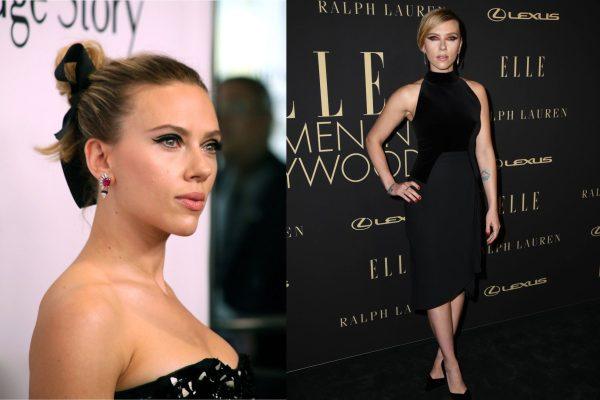
In a candid reflection on her early career, acclaimed actress Scarlett Johansson has opened up about the harsh aesthetic pressures and professional limitations she faced as a young woman in Hollywood during the early 2000s. Speaking with CBS Sunday Morning, the two-time Oscar nominee described an environment where criticism of women's appearances was rampant and career paths were frustratingly narrow.
Breaking Free from the 'Bombshell' Mold
Johansson, whose career now spans intimate dramas like Marriage Story to blockbuster franchises, explained that she was repeatedly offered the same types of roles at the start. The industry, she says, consistently tried to slot her into archetypes like "the other woman," the mistress, or the "bombshell." This pigeonholing wasn't just artistically stifling; it sent a clear message that her value was tied more to her image than her talent. She contrasts this with today's landscape, noting that actresses her age now have access to far more diverse and empowering characters, marking a significant shift in how women are portrayed on screen.
This evolution in storytelling resonates beyond mainstream Hollywood, reflecting a broader cultural demand for authenticity that we also see in projects championed by Latino creators across Los Angeles, México City, and Bogotá.
The Lasting Scars of On-Set Criticism
One of the most poignant moments from the interview involved Johansson recounting a traumatic experience from her childhood. While filming The Horse Whisperer at just 12 years old, a makeup artist pointed out a breakout of acne on her forehead, cruelly dubbing it "Vesuvius." The crew then worked to hide it with lighting, an act that made the young actress acutely aware of the industry's demand for physical perfection. "This lack of empathy toward a child in such a vulnerable stage of development left a deep mark," Johansson shared, highlighting how these early experiences shaped her understanding of Hollywood's often toxic beauty standards.
Her story underscores a persistent issue in entertainment, where the focus on appearance can overshadow craft. It's a conversation that parallels discussions about representation and pressure in other sectors, such as the financial dynamics highlighted in reports like Adam Sandler's top earnings in 2025, which spotlight who holds economic power and influence.
A Voice for Change and Resilience
Despite these challenges, Johansson's filmography—from Lost in Translation to The Avengers—stands as a testament to her resilience and ability to transcend simplistic labels. By speaking out now, she aims to contribute to an ongoing industry reckoning, hoping to foster a healthier environment for the next generation of performers. Her narrative is one of surviving an era of intense hypersexualization and using her platform to advocate for a focus on humanity and skill over superficiality.
This push for substantive change in Hollywood is part of a larger, global movement. It echoes the critical conversations happening around major events, like the shifting viewer engagement noted in the 2026 Oscars ratings analysis, which examine how audiences connect with content in new ways. Johansson's reflections add a vital personal dimension to these industry-wide shifts, reminding us that progress, while ongoing, is hard-won.