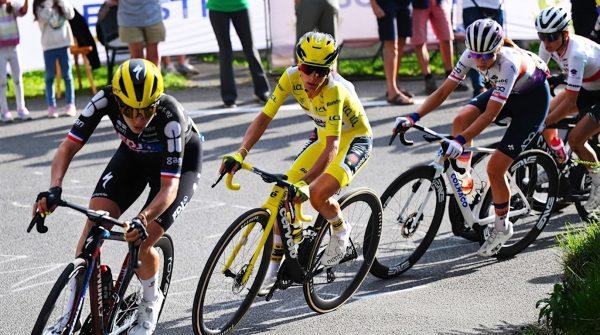
When Romina Hinojosa rolled out of the start gate in July 2026, she carried more than her own ambitions. As the first Mexican woman to ever line up at the Tour de France Femmes, the 23-year-old from the Lotto-Intermarché squad was already making history. But her debut was far from a ceremonial ride.
Hinojosa's race nearly ended early. On the second stage toward Geneva, she faced the real threat of missing the time cut, a brutal reality of Grand Tour racing. Yet she dug deep, survived the day, and then turned her Tour around with a bold attack on the legendary slopes of Mont Ventoux, riding alongside Sandrine Tas. That move not only secured her place in the race but announced her arrival on the world stage.
A continental breakthrough
Hinojosa's achievement is part of a larger story of Latin American and North American women making their mark in the sport's most demanding race. A record 13 riders from the Americas took the start across nine different teams, the highest continental representation in the race's five editions. Among them, Cuban veteran Arlenis Sierra lent her experience to Movistar Team, supporting Marlen Reusser and the unstoppable Demi Vollering, who claimed her second Tour de France Femmes title.
But the breakout star of the Americas was Canadian Isabella Holmgren. The Lidl-Trek rider stunned the cycling world with an eighth-place overall finish, also taking the white jersey as the best young rider. Her performance, alongside compatriots Magdeleine Vallieres (18th with EF Education-Oatly) and time trial champion Nadia Gontova, signals a generational shift in North American cycling.
American riders also played key roles: Kristen Faulkner, known for her innovative use of AI in training, finished 26th, while Lily Williams protected team leader Thalita de Jong. Alison Jackson and Heidi Franz drove the aggressive tactics for St Michel-Preference Home-Auber93.
Overcoming adversity
For Hinojosa, the Tour was a test of resilience. Her Lotto-Intermarché team lost four of its seven riders in the first three stages, leaving her and two teammates to carry the squad's hopes. Despite the physical toll, she found strength in the support of her partner, Mexican cyclist Isaac del Toro, who cheered her across the finish line in Nice.
“I felt immense pride wearing my country's colors,” Hinojosa told reporters. “Every obstacle was a lesson, and I grew stronger each day.” Her teammates also delivered: Linda Riedmann took tenth in Geneva, and Sandrine Tas, a former speed skater, finished sixteenth in the time trial.
Hinojosa's debut is more than a personal milestone. It opens doors for Latin American women in a sport long dominated by Europeans. As she put it, “This is just the beginning.” Her journey, from surviving the time cut to attacking on Mont Ventoux, is a testament to the grit that defines the new wave of cyclists from the Americas.
For young riders across México and beyond, Hinojosa's story is a call to chase their own Grand Tour dreams. And with the 2026 race already making history, the future of women's cycling in the region looks brighter than ever.