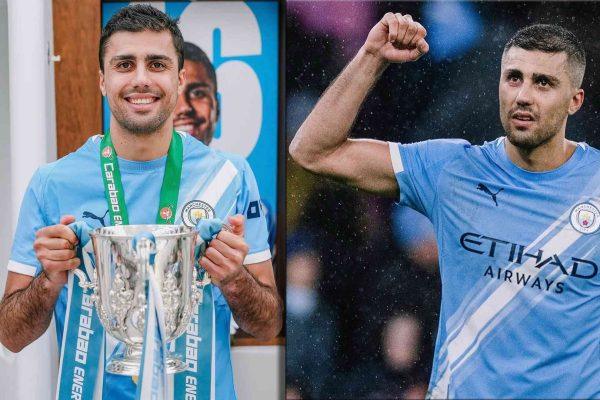
The summer transfer window has delivered one of its most gripping sagas: Rodri Hernández, the Manchester City midfield anchor, has decided to leave the Premier League and return to Spanish football. After weeks of speculation that pointed toward the Santiago Bernabéu, the Spanish international has made a surprising pivot, choosing FC Barcelona over Real Madrid.
Why Rodri said no to Madrid
Real Madrid's pursuit was relentless. For two weeks, the club's top executives presented Rodri with what insiders describe as a nearly irresistible contract offer. They saw him as the missing piece in their midfield, a player who could control games and anchor their transition. Yet, despite the financial firepower and the prestige of the white shirt, Rodri's decision came down to something more personal: the sporting vision.
According to sources close to the negotiations, Rodri communicated his choice directly to the Real Madrid board, expressing gratitude for their professionalism and respect throughout the process. It was an amicable exit, but a definitive one.
The Hansi Flick factor
The decisive element was a direct conversation with Barcelona's manager, Hansi Flick. In that meeting, Flick laid out a tactical blueprint that placed Rodri at the very heart of his system. The German coach emphasized Rodri's ability to regulate tempo, hold possession, and dictate play from the central zone—qualities that would make him the foundational pillar of Barça's midfield.
While Real Madrid boasts a physically imposing midfield, Barcelona offered Rodri something different: a role as the pure orchestrator, the player around whom the entire team's identity revolves. For a footballer of Rodri's intelligence and technical refinement, that promise of centrality was more compelling than any contract clause.
As one analyst put it, "Rodri didn't choose a club; he chose a system." And that system is now being built at Spotify Camp Nou.
Financial negotiations: Barça's €50M bid vs. City's €60M ask
With Rodri's consent secured, Barcelona's board is preparing a formal offer of €50 million. Manchester City, however, values their midfielder at €60 million. The gap is significant, but not insurmountable. Both clubs are in active talks to bridge the difference through add-ons and performance-related incentives, a common practice in modern transfers.
The player's clear preference gives Barcelona leverage. Rodri has made it known he wants to return to Spain, and City may have to accept a deal that reflects the player's wishes rather than their initial valuation.
End of an era at Manchester City
Rodri's departure would close a remarkable chapter at the Etihad. Since joining from Atlético de Madrid in 2019 for €70 million, he has made 298 appearances, scoring 28 goals and providing 32 assists. His crowning moment came in the 2022/23 Champions League final, where his strike against Inter Milan secured the treble for Pep Guardiola's side.
For Barcelona fans, the prospect of Rodri anchoring their midfield is tantalizing. He would bring the kind of composure and game intelligence that has been missing since the days of Sergio Busquets. And for Rodri, the move represents a homecoming of sorts—a chance to write his legacy in La Liga, the league where he first made his name.
As the negotiations continue, one thing is clear: Rodri's decision has reshaped the landscape of Spanish football. Real Madrid will have to look elsewhere, while Barcelona have landed a generational talent. The summer just got a lot more interesting.