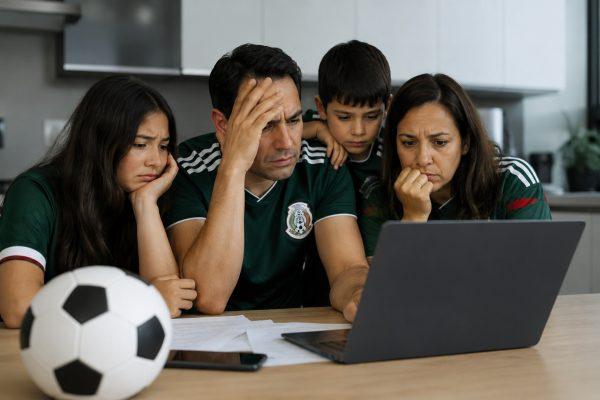
Mexico's early exit from the 2026 World Cup stung, but the federation didn't waste time. Rafa Márquez, now at the helm of the senior national team, has made it clear that the future starts now. And his first big move was paying close attention to the U-20 squad that just brought home the Concacaf championship and a ticket to the 2028 Los Angeles Olympics.
The tournament, which ended with a dramatic final against the United States at the Estadio Azteca, was more than a trophy. It was a showcase of a generation that Márquez believes can carry Mexico into the 2030 World Cup. The coach watched closely as his young players handled pressure, showed technical quality, and proved they belong on the international stage.
Five names to remember
Leading the list is Gilberto Mora, the 17-year-old midfielder who already saw minutes during the senior World Cup. Mora missed the U-20 tournament, but his composure on the ball and vision make him the most likely candidate to anchor Mexico's midfield for years to come. European clubs are already circling, and a move to a top league could accelerate his development.
Up front, Hugo Camberos of Chivas Guadalajara was the tournament's top scorer with five goals. His explosive runs and finishing instinct turned him into the offensive reference point. The challenge now is translating that form into regular minutes in Liga MX, where he'll need to prove he can do it week in and week out.
Another Chivas product, Santiago Sandoval, brought the flair on the wing. The 19-year-old's dribbling and creativity created chances throughout the competition. Like Camberos, his next step is securing a starting role at club level to keep his name in the conversation for the senior squad.
On the defensive side, Cristóbal Alfaro of Atlante was the hero of the final, scoring both winning goals. His physical presence and aerial ability make him an intriguing option for a backline that needs rebuilding. But to truly compete, he'll need to move up to top-flight football soon.
Finally, Henrique Simeone adds a multicultural twist. Born in Brazil, he chose to represent Mexico and showed tactical versatility in midfield. His inclusion gives Márquez a different profile in the center of the park, one that could expand the team's options as they look to deepen their roster.
These five players are part of a broader wave of talent that also includes the U-20 squad's qualification for the World Cup in Azerbaijan and Uzbekistan. But as Márquez knows well, youth success doesn't guarantee senior stardom. The gap between regional titles and World Cup glory is wide, and only consistent club minutes will close it.
By 2030, these prospects will be in their early twenties—the prime age for international football. The question is whether they'll get the playing time and mentorship needed to develop. Márquez, who himself was a teenage sensation at the 2002 World Cup, understands that path better than most. His presence could be the difference between a generation that fades and one that finally delivers on Mexico's promise.
For now, the excitement is real. The U-20s' win over the US at the Azteca was a statement, even if the VAR controversy left a bitter taste. And with Márquez at the wheel, the road to 2030 looks a little brighter.