The global club football hierarchy is shifting, and the latest rankings reflect a new reality: domestic dominance alone no longer guarantees continental success. Paris Saint-Germain, with back-to-back UEFA Champions League titles, now leads the pack, setting a benchmark for tactical intensity and squad depth. Meanwhile, Barcelona is rebuilding its European prestige with a wave of young talent, and Real Madrid, despite its star power, is still searching for the right balance on the pitch.
These rankings consider recent domestic performances, continental trophies, and current squad strength, offering a snapshot of the top 20 clubs across the world. For Latino fans, the list carries extra weight: from Flamengo's continental reign to the Argentine and Brazilian stars lighting up Europe's biggest stages.
The top 20: from Villarreal to the summit
At number 20, Villarreal continues to punch above its weight, proving that smart player development and organizational discipline can challenge wealthier rivals. Just above them, Napoli (19th) leans on the passion of the Stadio Diego Armando Maradona and two recent Serie A titles to stay among Italy's elite.
Juventus (18th) is in the middle of a rebuild, with Dusan Vlahovic leading a younger attack aimed at restoring domestic dominance in Turin. Sporting Portugal (17th) remains one of Europe's most efficient models, blending academy talent with high-intensity attacking football.
Manchester United (16th) still relies on individual brilliance, particularly from Bruno Fernandes, despite ongoing tactical inconsistencies. Unai Emery's Aston Villa (15th) has become a formidable Premier League side, anchored by Emiliano Martinez's world-class goalkeeping and a disciplined defense.
Bayer Leverkusen (14th) remains respected after its historic unbeaten domestic campaign, while Stuttgart (13th) continues to impress with a high-pressing, dynamic style that unsettles the Bundesliga's traditional powers.
South American pride and European tradition
Flamengo (12th) stands as the highest-ranked South American club, using its financial muscle and international experience to dominate the continent. Borussia Dortmund (11th) keeps its reputation as a talent factory, always dangerous in Champions League knockout ties.
Chelsea (10th) has bounced back after winning the 2025 Club World Cup, powered by young stars like Cole Palmer. Liverpool (9th) remains a goal-scoring machine under high-pressure tactics, racking up impressive numbers in the group stage.
Inter Milan (8th) relies on tactical structure and Lautaro Martinez's clinical finishing to stay competitive in Europe. Diego Simeone's Atletico Madrid (7th) epitomizes resilience, blending physical defending with tactical adaptability.
Real Madrid and Manchester City: star power vs. balance
Real Madrid (6th) boasts unmatched individual talent with Kylian Mbappe and Vinicius Junior, but the coaching staff is still looking for structural balance. Manchester City (5th) remains an elite technical side around Erling Haaland, though off-field financial proceedings continue to cast a shadow.
Bayern Munich (4th), under Vincent Kompany, has rediscovered its offensive punch with Harry Kane leading the line. Arsenal (3rd) has matured into a defensive juggernaut under Mikel Arteta, with set-piece mastery and Martin Odegaard's midfield control.
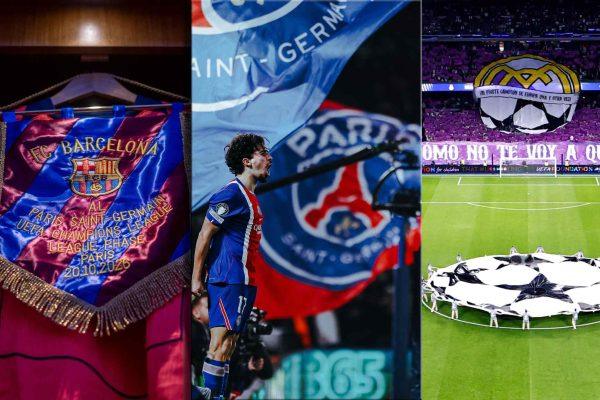
Barcelona (2nd) has recaptured global attention with a youth-driven revival, blending La Masia graduates with savvy signings. Their recent loss to PSG exposed some cracks, but the project under Hansi Flick is clearly progressing. The club's audacious pursuit of Julián Álvarez, which may cost key starters, shows their ambition.
At the top, PSG (1st) has solidified its place as the world's best, with a squad that blends French flair and international stars. Their dominance is a testament to the new world order in club football, where financial power and tactical innovation reign supreme.
For Latino fans, the rankings also highlight the growing influence of players from the region. From Lautaro Martinez to Vinicius Junior, and with young talents like Gilberto Mora drawing interest from Europe's giants, the connection between Latin America and the global game remains strong. As the season progresses, all eyes will be on how these clubs navigate the challenges ahead, especially with El Clásico looming and the Champions League knockout rounds heating up.