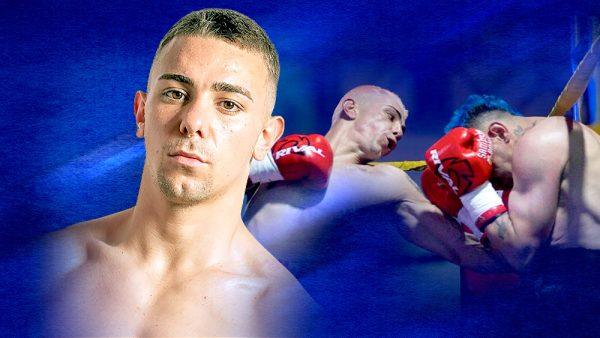
In the traditionally macho world of boxing, a young Uruguayan athlete is throwing punches that resonate far beyond the ring. At 21, Oscar Bonifacino from Maldonado has not only launched a promising professional career but has also become a powerful symbol of authenticity and resilience for the LGBTQ+ community across Latin America.
From Adversity to the Arena
Bonifacino's path to boxing was forged in hardship. He grew up in a settlement on an abandoned quarry on the outskirts of Maldonado, part of a large family where he endured physical violence from his father. "Since I was little, I suffered physical violence from my dad, people around me discriminated against me, and I absorbed all the negative things," he told Argentine outlet TN. His teenage rebellion led him into dangerous situations, including being shot in the foot.
His salvation came through his sister-in-law, Jacque, who encouraged him to channel his turbulent energy into boxing. At 18, he put on gloves for the first time under coach Luis Castro Veloz. Just one month into training, he won his amateur debut, discovering a profound sense of belonging. "When I started boxing, I realized who I truly was," he later reflected to Clarín, describing the sport as his refuge and purpose.
A pivotal figure emerged in professional boxer and trainer Elizabeth Cabrera, who became a maternal figure. "More than my trainer, she’s like a mother. From day one, she opened her gym and her home to me," Bonifacino shared. Cabrera was also the first person he confided in about his sexual orientation, a crucial step in his journey toward self-acceptance.
A Historic Declaration
On February 22, 2025, Bonifacino made his professional debut in his hometown of Maldonado, winning by technical knockout in the second round. In a moment that would define his public identity, he took the microphone and declared, "I am a free person, I am a gay man." The statement sent a powerful message through a sport steeped in rigid masculinity.
"I fight for the LGBT community, to break all the stereotypes and barriers in society," he explained. "I want to help those who weren’t able to raise their voice. Let them look at me and say, 'If he can be there, then I can also be who I am.'" His advocacy mirrors the spirit of visibility seen in events like Global Pride 2025, which celebrated community from São Paulo to México City.
His commitment was on full display in June when he fought at the World Boxing Association's KO to Drugs festival in Buenos Aires. Stepping into the ring after Filipino legend Nonito Donaire, Bonifacino defeated Argentina's Matías Yanguas on points while wearing a band in the colors of the rainbow flag.
Breaking Stereotypes with Every Punch
Bonifacino is acutely aware of the stereotypes he challenges. "Boxing is seen as a very masculine sport where you can’t show fragility, so to speak. I want to prove them wrong," he stated. "I’m an athlete with a different sexual orientation, but in the ring, I’m just another guy and I want to give it my all." His journey underscores a broader cultural shift where authenticity is celebrated, similar to stories like Frankie Grande's embrace of sobriety and community in his music.
His talent has attracted significant backing. After his debut, he signed with renowned Uruguayan promoter Sampson Lewkowicz, who has worked with icons like Manny Pacquiao and Sergio 'Maravilla' Martínez. Lewkowicz sees star potential: "Oscar is very responsible and has a forward-moving style. I think he will become the most famous boxer in South America."
Now based in Montevideo, Bonifacino trains with clear ambition. "I believe that in two or three years I’ll be fighting for a title. I don’t know if it will be a world championship, but it will definitely be one that brings me closer to that goal," he said. His story is one of transformation, from a place of deep pain to one of public purpose. "Five years ago, I thought about ending my life," he wrote on social media. "But when I was able to say who I am, a huge weight was lifted and today I am here to shine."
Oscar Bonifacino represents a new generation of Latin American athletes who are redefining strength. His courage in the ring is matched by the bravery it takes to live openly, proving that the most impactful victories are often those fought for identity and acceptance. His narrative of perseverance resonates with other stories of breaking barriers, such as Elvis Nolasco's journey from NYC breakdancer to sharing the screen with Oscar winners.